I’ve been coming to Colombia since 2021. My first trip was three months, and I landed thinking I’d have all the time in the world to see the whole country. I didn’t see the whole country. I liked the places I was in too much to leave them, and five years later there’s still a long list of places I haven’t reached.
So let me be straight about what this is. Twelve Colombian beach towns made this list, and I’ve been to four of them. Four. The other eight are places I’ve read about, asked about, and put on a list I keep meaning to get through. I’ll tell you which is which every single time, because I’d rather you trust the four than assume I’ve seen all twelve.
For context on where I’m standing: I’m Haitian, I live in Montreal, and I bought an apartment in Santa Marta in 2025 because I fell in love with the city. That’s the lens.
Key Takeaways
- Cartagena and Santa Marta are cities, not towns, and Parque Tayrona is a national park. They’re on the list anyway because they’re what people actually search for.
- Santa Marta is the best base on the Caribbean side. Everything else is a short ride from it.
- The Caribbean here is not always safe to swim in. Three tourists drowned near Tayrona on 14–15 July 2026. Rip currents are real on this coast, and the calmest-looking water is often the worst.
- The Pacific side (Nuquí, Bahía Solano) is a separate trip: no roads, small planes from Medellín, and whales from July to November.
- Prices below are either what I paid, or a sourced published rate with its date. Nothing invented.
Here’s the whole list at a glance, with what I can and can’t vouch for:
| Place | What it is | Have I been? | Best time |
|---|---|---|---|
| Cartagena | Walled city | Yes, several times | Dec–Apr, or shoulder months |
| Santa Marta | Port city, my base | Yes, I live there part of the year | Dec–Apr |
| Taganga | Fishing village | Yes | Any dry weekday |
| Parque Tayrona | National park | Yes | Dry season, at opening |
| Palomino | River-meets-sea village | No — next on my list | Dec–Apr |
| San Andrés | Island, 750 km offshore | No | Jan–Apr |
| Cabo de la Vela | Wayuu desert village | No | Dry, windy months |
| Tolú | Gateway to San Bernardo islands | No | Dec–Apr |
| Capurganá | Border village, no roads | No | Dry season |
| Nuquí | Pacific, rainforest | No | Jul–Nov for whales |
| Bahía Solano | Pacific, whales | No | Aug–Oct |
| Puerto Colombia | Beach town near Barranquilla | No — 20 min from where I’ve been | Dec–Apr |
Cartagena

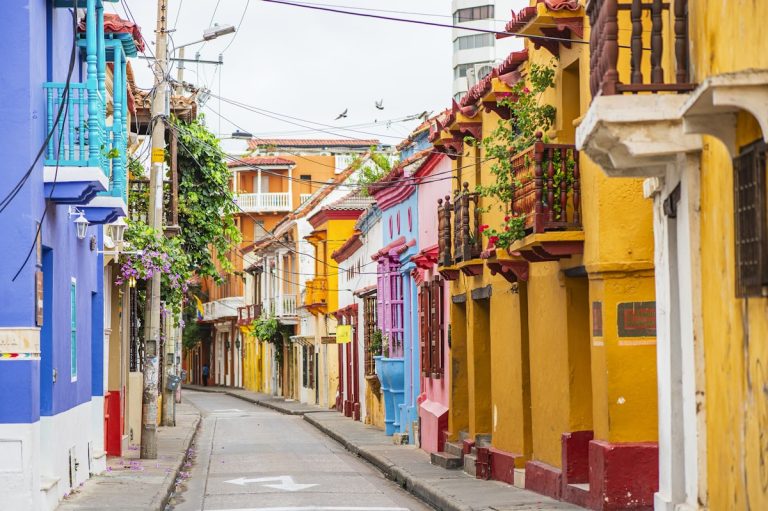
Cartagena has everything, and that’s not a figure of speech. The fort, the walled old town, Getsemaní next door, La Popa looking down on all of it, small islands a boat ride away when you need to do nothing. There’s a shopping mall on the water where Montreal would have put a parking lot — that detail says more about the city than any adjective I could use. It’s obvious why the tourists come.
The vendors, and how to handle them
What’s less fun: the vendors. On the beach and in parts of the old town, they don’t stop at the first no, and sometimes not at the second either. It wears you down if you’re not ready for it. Learn to keep walking without engaging, and don’t feel bad about it.
Bocagrande with friends from home — the beach, the walk to the fort, a taxi negotiation.
What the walls are actually for
While I’m here, let me correct something a local guide told me on camera. She said the indigenous people built the walls against the Spanish and that Cartagena was never conquered. The actual record: Cartagena de Indias was founded by the Spanish, by Pedro de Heredia, on June 1, 1533. The Spanish built the fortifications, from the late 1500s onward, against pirates and rival European powers. The English privateer Francis Drake sacked the city in 1586. The Kalamarí and the wider Carib peoples were displaced by colonization; they didn’t build those walls. The longer version is in the history of Cartagena.
Best time: December to April is dry and reliable, and also the most crowded and expensive. I prefer the shoulder months.
Getting there: direct flights from Montreal, Toronto and most US hubs. Once you’re in, the old town is walkable and everything else is a short taxi — agree the fare before you get in.
Santa Marta
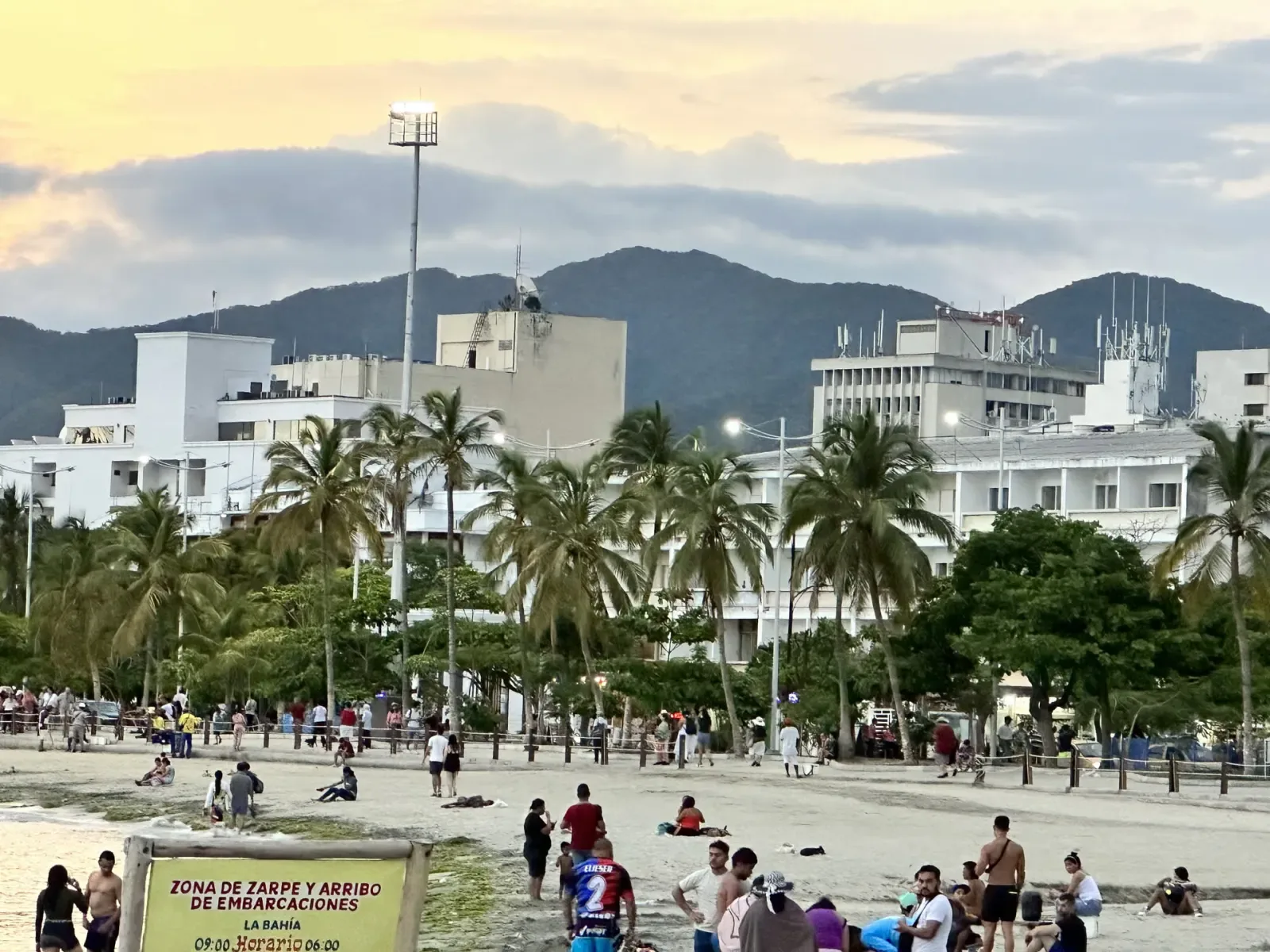
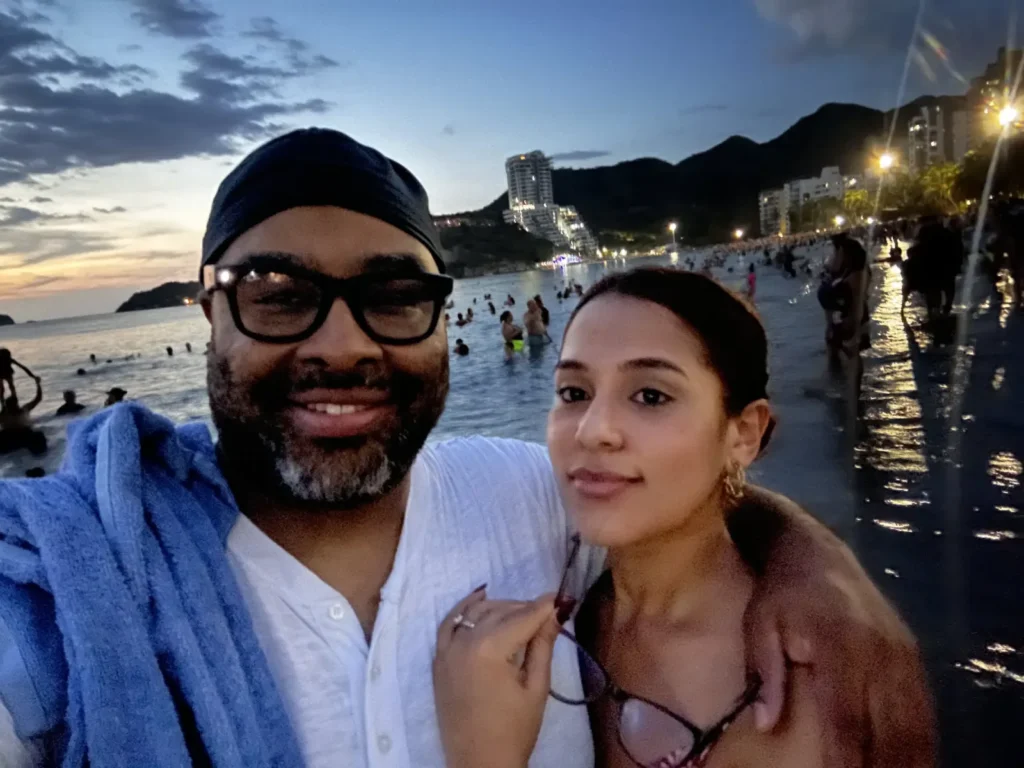
I’ve always loved the beach. Then I spent three months in Medellín and fell for mountain views in a way I didn’t expect. So the first time I stood in Santa Marta and saw beach and mountain in the same frame — that was it. That’s the whole reason I ended up buying an apartment here in 2025.
Beach and mountain in the same frame
The Sierra Nevada de Santa Marta rises straight up behind the city. You can be in cloud forest in Minca an hour after breakfast and back in the Caribbean by mid-afternoon. I don’t know anywhere else on this coast where that’s true.
What’s less fun: Santa Marta is not a beautiful city. It’s the oldest in Colombia and it’s also a working port — traffic, noise, uneven sidewalks, a waterfront nobody’s putting on a postcard. People arrive expecting Cartagena and find something scruffier. A lot of guides skip past that. I won’t, because knowing it going in is exactly what lets you enjoy the place.
What it has instead is position and life. Tayrona, Minca, Taganga, Palomino — all short rides. And it’s a city where people live rather than one built to receive you.

The Mercado Público, before the heat
Go to the Mercado Público early, before the heat. It’s not a tourist market, it’s where the city buys its food, and the fruit section alone is worth the morning.
Best time: December to April for dry weather. I’d take the shoulder months for the prices and the calm.
Getting there: flights into Simón Bolívar airport, or about four hours by bus from Cartagena.
Taganga
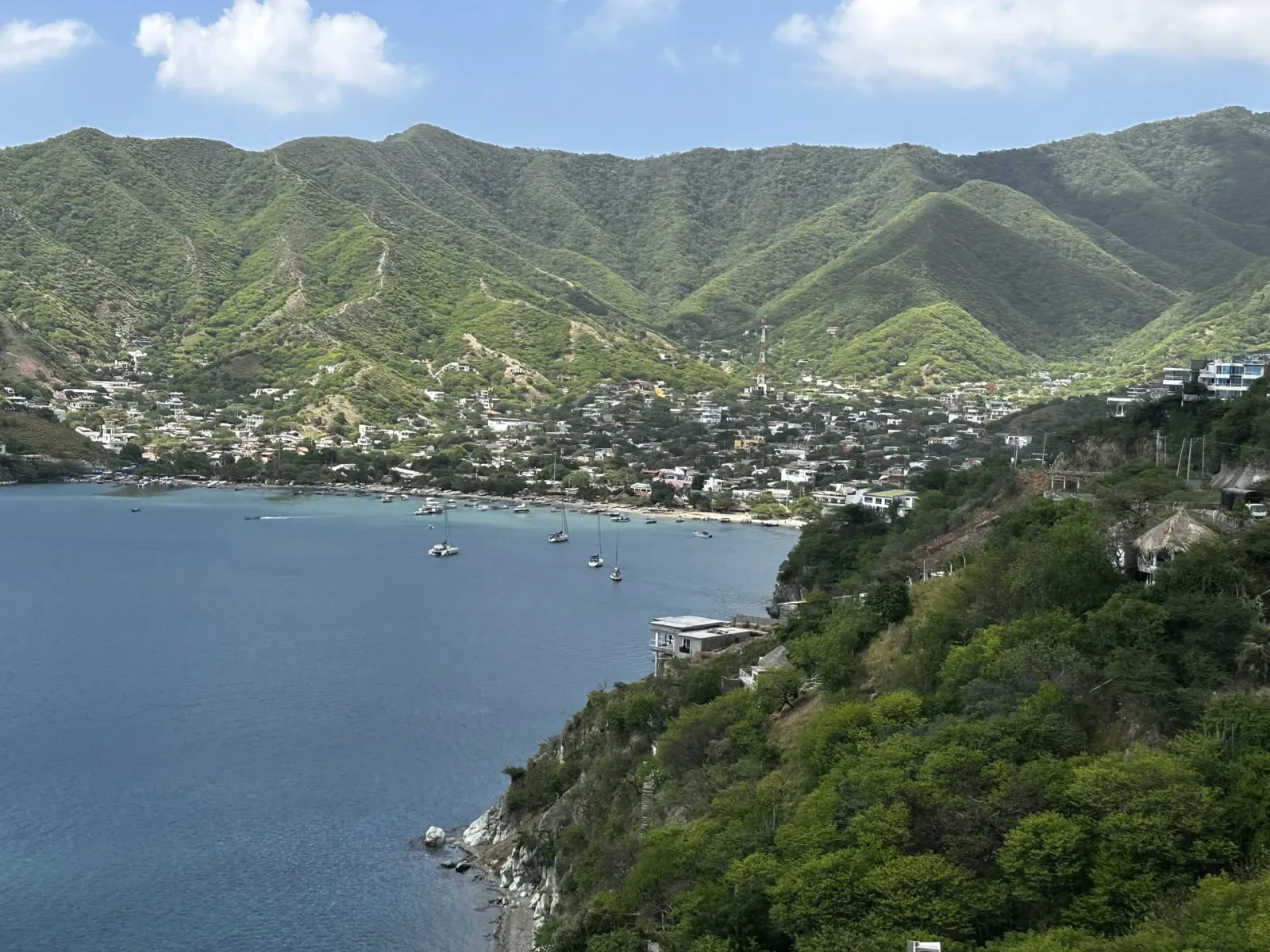
Taganga is a fishing village in the next bay over from Santa Marta — a short taxi and you’re there.
I’ll be straight: it’s not the prettiest beach, and that’s a shame, because the setting is close to perfect. Mountains dropping into the sea, boats in the bay, open-air restaurants right on the water. The view writes cheques the sand doesn’t quite cash.
I still love going. The full experience is what does it — eating with the bay in front of you, sitting through the afternoon, and yes, swimming, even knowing the beach isn’t the best on the coast. Some places you go for the sand. This one you go for everything around it.
What’s less fun: weekends. It fills up with people from Santa Marta and the beach gets packed. Midweek it’s boats, nets and quiet. Same village, different day.
Diving here, and what to check first
Taganga is also one of the cheapest places in the Americas to get dive certified, and there are a lot of operators. The flip side of that price competition is uneven standards — judge the equipment and the instructor’s certification, not the number on the board.
Best time: any dry-season weekday. Avoid Saturday and Sunday.
Parque Tayrona
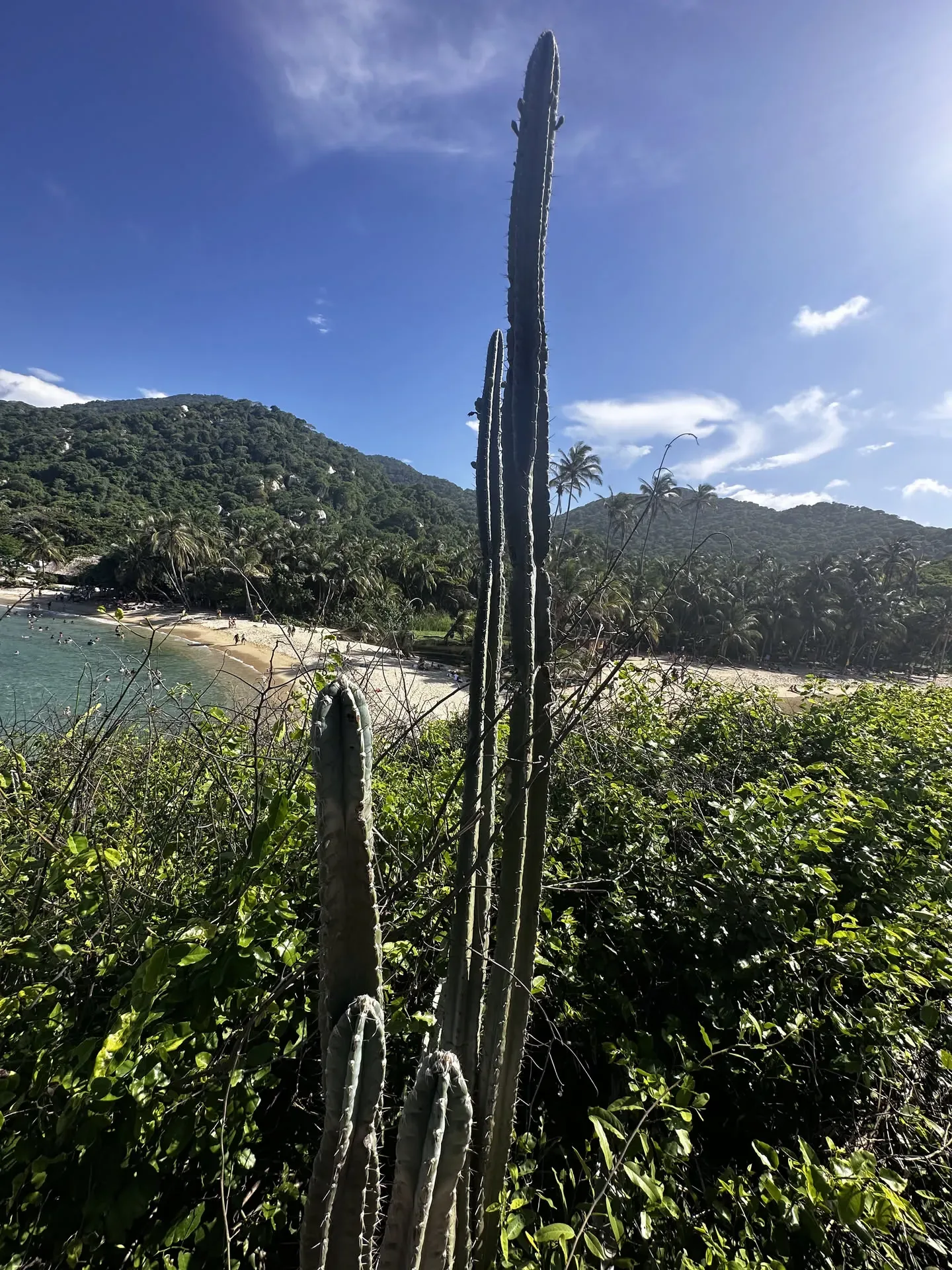
Technically this isn’t a town at all — it’s a national park. It’s on the list because you cannot talk about this coast without it, and because it’s the day trip everyone makes from Santa Marta.
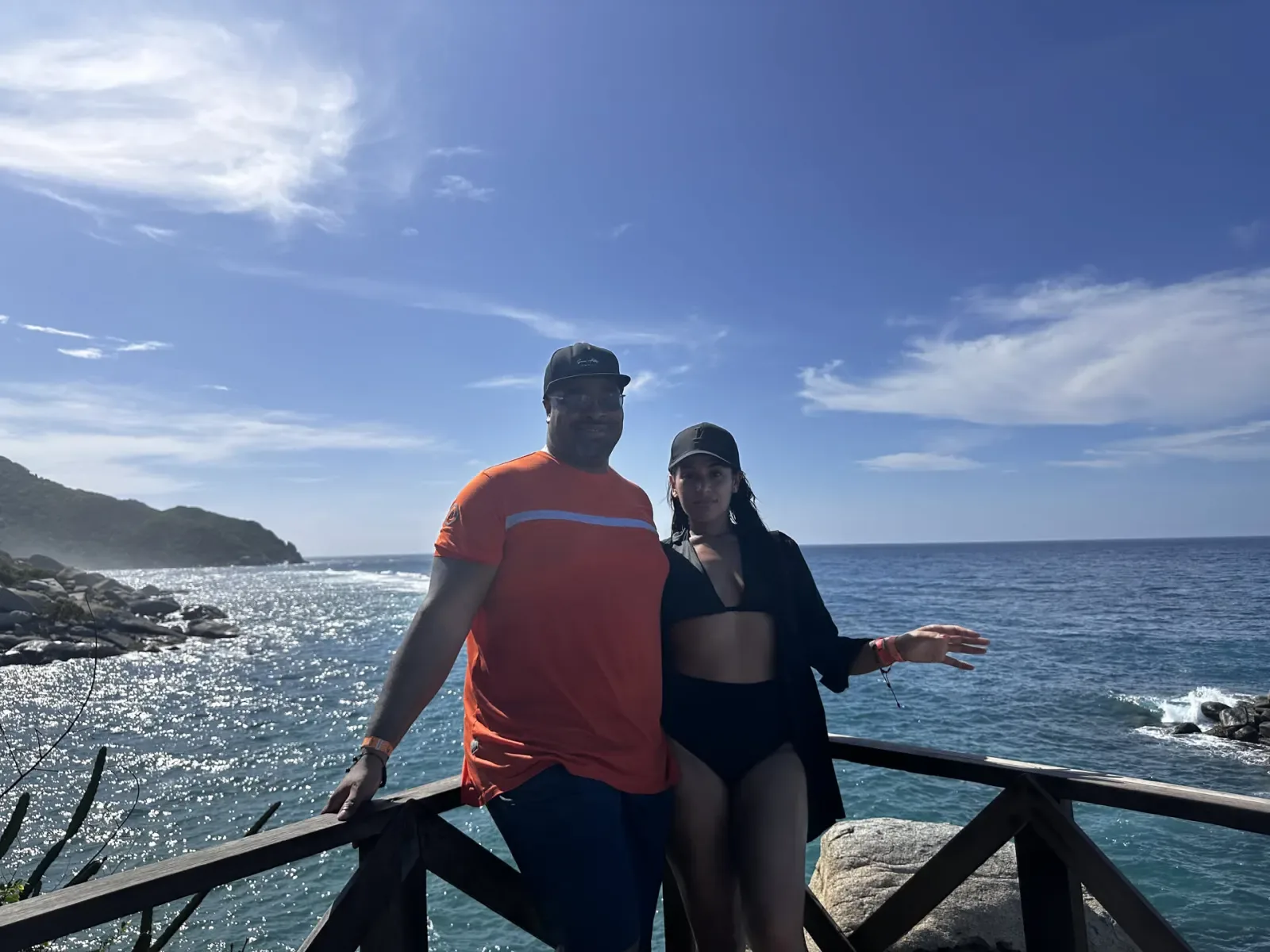
I’ve been, and these are my own photos of it. Jungle running straight down to boulder-strewn beaches, and water that changes colour through the day.
The water is not always safe
What’s less fun, and this is the serious part: the sea here kills people. On 14 and 15 July 2026, three tourists drowned in two separate incidents — one at Los Cocos beach in the Mendihuaca sector, two at Los Angeles beach near Los Naranjos — while authorities were warning of strong winds, rip currents and waves reaching four metres (full report).
Here’s the part worth knowing before you get in the water. Officials pointed out that a rip current often looks calmer than the water around it: you see fewer breaking waves and read the area as safer, when in fact the water is moving away from the beach fast. The flat-looking patch is the dangerous one.
Most beaches inside Tayrona are marked unsafe for swimming, red flags mean closed, and none of that is decoration. Swim only where it’s explicitly allowed.
Hours, fees, and the closures that catch people out
Prices and hours, published by the park authority and current ticketing operators:
| What | Detail |
|---|---|
| Opening hours | 8am to 5pm, last entry 4pm at the El Zaíno gate |
| Foreign non-resident | 81,000 COP low season · 96,500 COP high season |
| Bahía Concha sector | 43,500 COP year-round |
| Colombians & residents (25+) | 36,500–43,000 COP |
| Annual closures | 1–15 February · 1–15 June · 19 October–2 November |
Those closures are requested by the indigenous peoples of the Sierra Nevada, and they catch people out every year. Check the dates before you book flights. Details are on the Parques Nacionales Naturales de Colombia site and current fees are listed by local ticketing operators. I’ve written a fuller guide to Tayrona here.
Best time: dry season, and arrive at opening. The park fills through the morning.
Palomino
I have not been to Palomino. It’s about two hours east of my own front door, everybody I know talks about it, and it’s the next place on my list. So here’s the research, not a memory.
What it is: a small village where the Palomino river comes down out of the Sierra Nevada and empties straight into the Caribbean. Fresh water, salt water and mountains in one view. Hammocks, cabañas, one main road off the highway.
How you get there: roughly two hours by public bus from Santa Marta.
What it costs: the signature activity is tubing — you’re driven up into the hills by motorbike and float back down the river through jungle. Published rates run around 25,000 COP including the tube and a guide, with some operators listed nearer 40,000 COP.
Best time: dry season, December to April.
The thing to watch: where the river meets the sea, the currents are strong and the waves can be high. Multiple guides describe swimming there as difficult to genuinely dangerous. Given what happened at Tayrona in July 2026, treat this coast’s water with more caution than the hammock photos suggest.
Source: Cartagena Explorer’s Palomino guide · The Culture Trip on tubing
San Andrés
Never been. But people bring it up constantly, and I want to see it.
What it is: an island, and I’ll be upfront — it’s an archipelago about 750 km off the Colombian mainland, closer to Nicaragua than to Cartagena. Calling it a coastal town is a stretch. It’s here because you can’t discuss the Colombian sea without it. What it’s known for is the mar de siete colores, the seven-coloured sea: bands of blue and green that shift with depth and light.
How you get there: flights only, mainly from Bogotá to Gustavo Rojas Pinilla (ADZ), with several daily on Avianca and LATAM.
What it costs: every visitor needs a tourist card, mandatory to enter. For 2026 it’s 153,000 COP, up from 146,000 the year before. Round-trip flights from Bogotá typically run US$120–240 depending on season and how early you book.
Best time: the dry season runs December to May, with January to April usually cited as the sweet spot. June to November is wetter, quieter and cheaper.
The thing to watch: the tourist card is not optional and not always included in your ticket. Budget it separately.
Source: official 2026 tourist card price · San Andrés climate
Cabo de la Vela
Never been. This is the one I most want to fix.
What it is: a Wayuu fishing village in La Guajira, at the top of South America, where the desert runs straight into the Caribbean. This is the one place on the list where the word breathtaking earns itself. Golden dunes, cliffs, turquoise water, and the Pilón de Azúcar hill for the view over all of it. It’s sacred ground in Wayuu culture.
How you get there: it’s a commitment. Fly or bus to Riohacha, then four to five hours by 4×4 across desert tracks. There is no comfortable version of this trip.
What it costs: accommodation is basic — hammocks and simple rooms in Wayuu-run posadas. Budget for the 4×4 transfer as the main expense.
Best time: the dry months, and note that this is a windy coast — which is exactly why it’s become a kitesurfing spot.
The thing to watch: there is no running water in the village, electricity comes from a generator at best, and comfort is not on offer. Go with operators who work directly with the Wayuu communities rather than around them. La Guajira has real water scarcity and real poverty; this is visiting people’s home, not a scheduled attraction.
Source: Trans-Americas on the Guajira Peninsula
Tolú
I don’t know this one — it’s research.
What it is: a low-key beach town on the Gulf of Morrosquillo, between Cartagena and Montería, used far more by Colombian holidaymakers than by foreigners. Its real draw is as the jumping-off point for the Islas de San Bernardo and Isla Múcura, where the water is what people come for.
How you get there: bus from Cartagena or Montería; boats to the islands leave from town.
What it costs: island day trips are the main expense, sold from the waterfront. I don’t have a rate I can stand behind, so I’m not going to invent one — ask two or three operators when you arrive and compare.
Best time: dry season, December to April.
The thing to watch: reviews of the town beach itself are mixed. Go for the islands, and treat the town as the base rather than the destination.
Capurganá
Research, not experience.
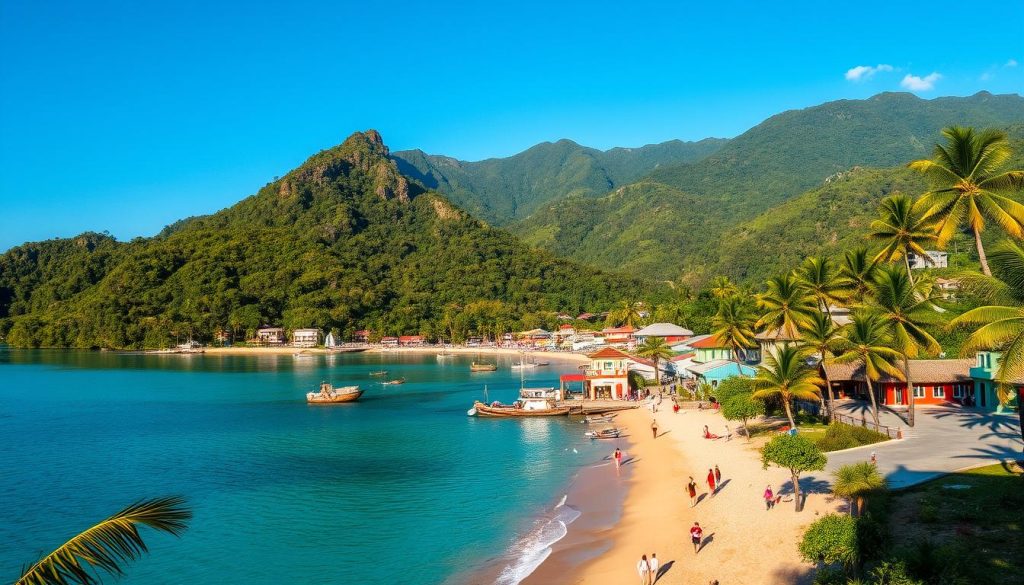
What it is: a village on the Caribbean pressed right up against the Panamanian border, in the Darién. There is no road access at all and no cars in the village. Diving, jungle walks, and genuine remoteness.
How you get there: by boat from Necoclí, or fly to Acandí and take a boat from there. The Necoclí crossing runs about 1 hour 30 minutes, with departures from around 8am.
What it costs: a round-trip boat ticket from Necoclí was listed at roughly 190,000 COP as of 2025. Prices are set locally and move with the season.
Best time: dry season, and check sea conditions — the crossing is open water.
Why you check conditions before booking
The thing to watch, and it matters: the Darién Gap is immediately adjacent and is an active migration corridor with a serious security situation. Necoclí, the departure port, is under real strain. Check current conditions from recent sources before you commit — not from a listicle, including this one.
Source: Rome2Rio on the Capurganá–Necoclí crossing
Nuquí
Research.
What it is: a town on the Pacific coast in Chocó — rainforest to the waterline, dark sand, hot springs, and whales in season. This is a completely different Colombia from the Caribbean side: wetter, wilder, largely Afro-Colombian.
How you get there: small plane from Medellín. There is no road.
What it costs: the flight is the gate and the eco-lodges are priced for a captive market. This is a trip you plan around, not one you add on.
Best time: early July to late November for humpback whales, with August and September usually the best. The whales travel roughly 5,800 miles from Antarctica to calve here.
The thing to watch: Chocó is among the wettest places on earth. Pack for rain, not for beach weather.
Source: Colombia’s official tourism board on the humpbacks
Bahía Solano
Research.
What it is: the other whale town, north of Nuquí on the same Pacific coast. Also reached only by air, also no road.
How you get there: small plane from Medellín.
What it costs: same structure as Nuquí — flight plus lodge, with little in between.
Best time: August to October, inside the wider July-to-November migration. Whales calve close to shore in the Ensenada de Utría, the sheltered cove between Bahía Solano and Nuquí, which is why sightings here happen near land rather than far out.
The thing to watch: beyond whales there’s sport fishing, waterfalls and community tourism, but infrastructure is thin. Utría National Park sits between the two towns and is the reason most people combine them.
Source: Colombia Travel on the Pacific whale season
| Nuquí | Bahía Solano | |
|---|---|---|
| Access | Small plane from Medellín | Small plane from Medellín |
| Whale season | Early Jul – late Nov | Aug – Oct is the peak |
| Why it’s known | Surfing at Guachalito, hot springs, Emberá communities | Calving close to shore, sport fishing, waterfalls |
| Shared | Utría National Park sits between them — the sheltered cove where whales give birth | |
| Rain | Chocó is among the wettest places on earth. Pack for it. | |
Puerto Colombia
I’ve been to Barranquilla, but I never made it to Puerto Colombia — which is a twenty-minute drive away and firmly on my list. Partly for the beach, partly because this is Shakira and Sofía Vergara country and I want to see what that coast actually looks like.
What it is: a small coastal town in Atlántico, historically the port of Barranquilla, known for its long pier.
How you get there: roughly twenty minutes by road from Barranquilla.
What it costs: it’s a day trip rather than a destination — transport and lunch. I don’t have figures I can vouch for.
Best time: December to April for dry weather. Barranquilla’s Carnival, in February or March, transforms the whole area — worth timing for, or avoiding, depending on what you want.
The thing to watch: this is a local beach, not a resort strip. Go expecting a Colombian weekend town rather than a postcard.
How I’d Choose Between These Colombian Beach Towns

Ten days, first time: fly into Cartagena, two nights inside the walls, bus to Santa Marta, base there for four or five nights with Tayrona, Minca and Taganga as day trips, then Palomino for two, and fly home out of Santa Marta.
If whales are the point, treat the Pacific as its own trip in September, fly Medellín to Nuquí, and don’t try to bolt it onto the Caribbean. They’re too far apart, in distance and in kind.
And the honest closing thought: after five years I still haven’t seen most of this list. That’s not a failure of planning. It’s what happens when you like the places you’re in enough to stay. The four I know well, I know because I kept going back — and the eight I don’t are the reason I keep booking flights. More on getting around safely in my guide to travelling in Colombia and the solo traveller’s guide.
FAQ
What is the best time of year to visit Cartagena?
December to April is the dry season and the most reliable weather, but it’s also the most crowded and expensive. The shoulder months — May to June, September to November — bring more rain but lower prices and fewer people. I prefer them. There’s more on this in my guide to the best time to visit Cartagena.
Should I stay in Santa Marta or Taganga for a beach and mountain view?
Santa Marta, for the base. It has the airport, the services and the connections to Tayrona, Minca and Palomino. Taganga has the better bay view and open-air restaurants on the water, but the beach itself isn’t the coast’s best and it’s packed at weekends. Stay in Santa Marta, spend a midweek afternoon in Taganga.
Is Parque Tayrona a town or a national park?
A national park. There’s no village inside it — only entrances, campsites and beaches. It’s on this list because it’s the day trip everyone makes from Santa Marta and because you can’t discuss this coast without it.
How do you get to Cabo de la Vela and what should I know before going?
Fly or bus to Riohacha, then four to five hours by 4×4 across the desert. There’s no running water in the village and electricity comes from a generator. Accommodation is hammocks and basic rooms in Wayuu-run posadas. Go with operators who work directly with the communities.
What is the best time to visit Palomino?
The dry season, December to April. But regardless of season, the currents where the river meets the sea are strong and the water can be dangerous — swim shallow or stay at the river mouth.
How far is San Andrés from mainland Colombia?
About 750 km, closer to Nicaragua than to the Colombian coast. You get there by plane, mainly from Bogotá. Every visitor needs a tourist card, which costs 153,000 COP in 2026.
Which Colombian coastal towns have no running water or electricity?
Cabo de la Vela is the clearest case — no running water, generator power at best. Capurganá has no road access and no cars. Nuquí and Bahía Solano are reachable only by small plane. These are the four where you should plan for genuine remoteness.
Is Puerto Colombia worth visiting if I’m already in Barranquilla?
It’s twenty minutes away, so the cost of finding out is low. It’s a local beach town with a historic pier rather than a resort strip. If you’re in Barranquilla during Carnival in February or March, the whole area changes character.
Is it safe to swim on Colombia’s Caribbean coast?
Not everywhere, and this deserves more attention than it usually gets. Three tourists drowned near Tayrona on 14–15 July 2026 amid rip current warnings, with waves up to four metres. Many Tayrona beaches are marked as unsafe for swimming, and Palomino’s river mouth has strong currents. Swim where it’s explicitly permitted and take the warnings seriously.