
Discover the Rich History of Cartagena, Colombia
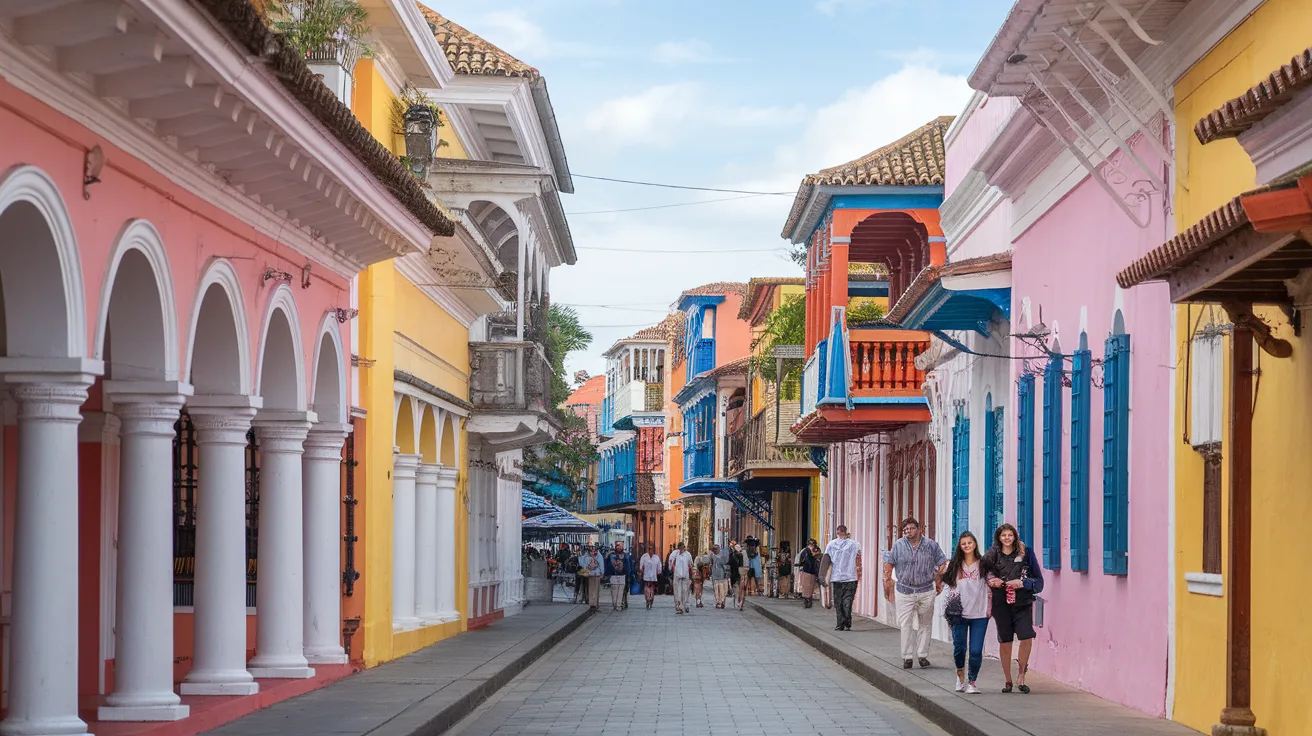
Get ready for a journey through time in Cartagena, a lively city on Colombia’s Caribbean coast. It started with the Calamari people and grew into a vital Spanish port. Cartagena’s story is filled with resilience, strategic importance, and cultural diversity.
We’ll explore the city’s past, including Spanish conquests, pirate raids, and the fight for freedom. You’ll see its beautiful colonial buildings, strong Spanish defenses, and the lasting impact of African culture.
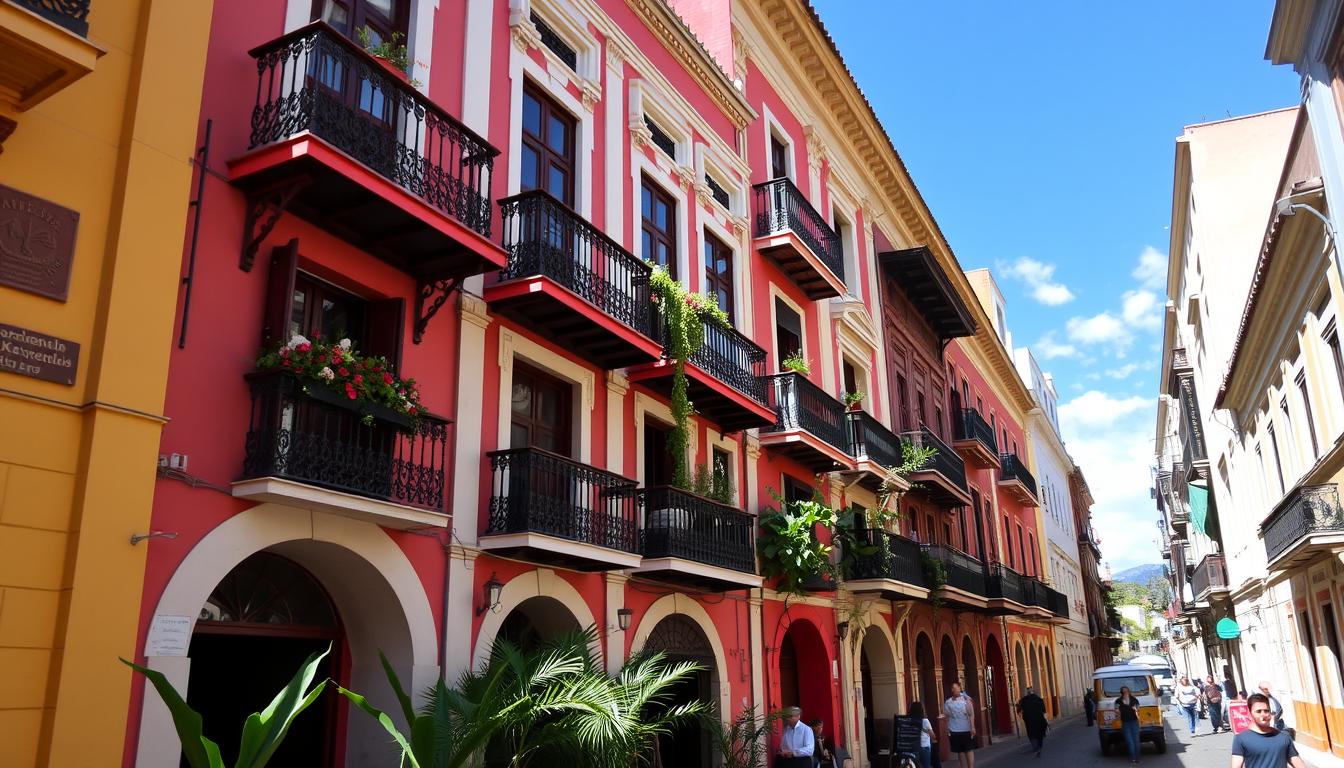
Join me on this exciting journey through Cartagena’s history. We’ll uncover the stories of people, events, and places that have made this Caribbean gem unforgettable.
Key Takeaways
- Cartagena’s history spans from its indigenous roots to its current status as a popular tourist destination.
- The city played a crucial role as a strategic port in the Spanish Empire.
- Cartagena’s colonial architecture and fortifications are testaments to its rich past.
- The influence of African culture is deeply ingrained in Cartagena’s identity.
- Resilience in the face of pirate attacks and the fight for independence shaped the city’s character.
Introducing Cartagena: A City Steeped in History
Nestled along the shimmering Caribbean coast of Colombia lies the enchanting city of Cartagena. It’s a treasure trove of history and culture. This historic city has captured the hearts of travelers for centuries.
Travelers are drawn to its cobblestone streets, vibrant plazas, and majestic colonial architecture.
Founded in 1533 by Spanish conquistador Pedro de Heredia, Cartagena quickly became a crucial port city. It was a key player in the Spanish Empire’s trade and defense strategies. The city’s strategic location made it a hub for the exchange of goods, ideas, and cultures from around the world.
“Cartagena de Indias is the most beautiful city in the world.” – Gabriel García Márquez
As you wander through the streets of Cartagena’s historic walled city, you’ll be transported back in time. The colorful colonial buildings, adorned with bougainvillea-draped balconies, whisper tales of a bygone era. The imposing fortifications that encircle the city stand as a testament to its importance and the challenges it faced throughout history.
From the indigenous Calamari people who first inhabited the area to the Spanish conquest, the transatlantic slave trade, and the city’s ultimate fight for independence, Cartagena has witnessed a tapestry of human experiences. Today, this Colombian gem invites visitors to immerse themselves in its rich history. It offers vibrant culture, warm hospitality, and stunning Caribbean scenery, making Cartagena an unforgettable destination.
The Early Days: Indigenous Peoples and Spanish Conquest
Before the Spanish arrived, the area now known as Cartagena was home to the Calamari people. They had a rich culture and history. The Calamari lived by the Caribbean coast, fishing and farming to survive.
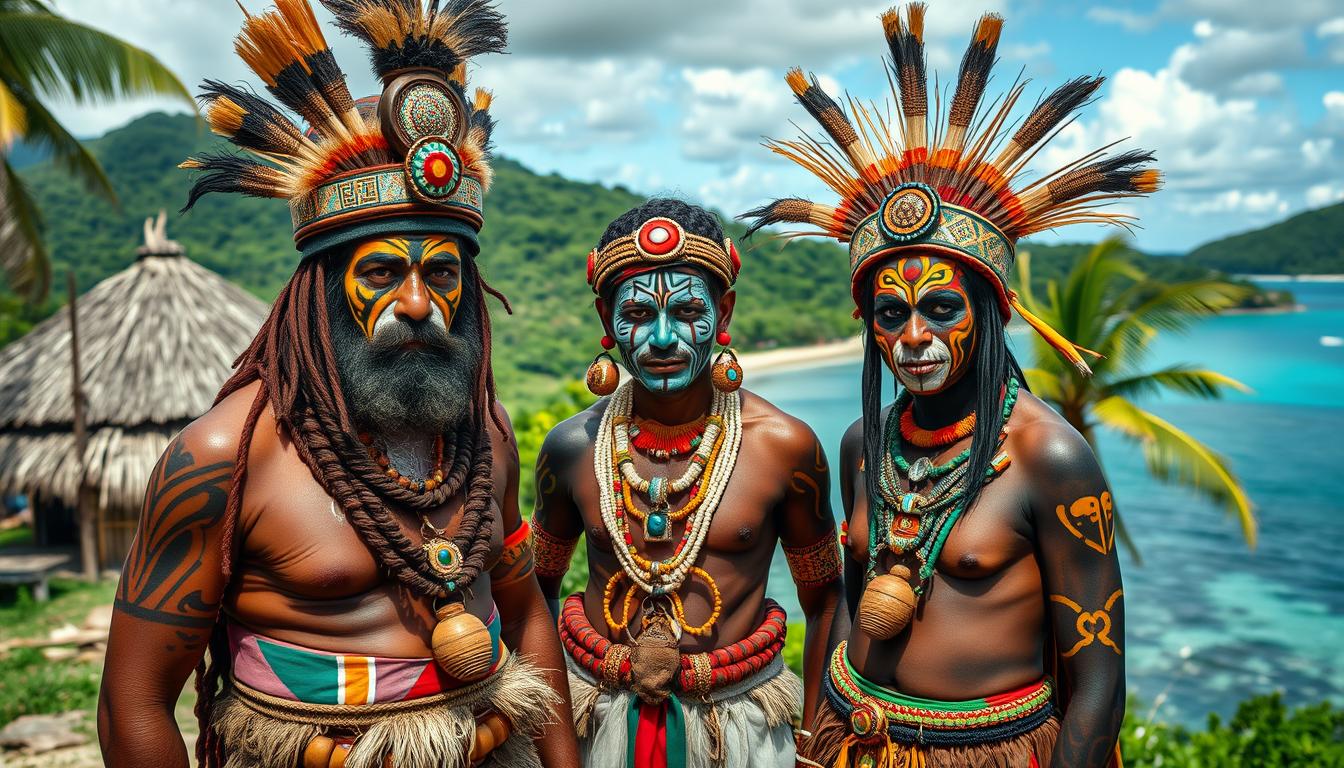
The Calamari had a complex society and a strong bond with the land. They were known for their pottery, weaving, and gold jewelry. For centuries, they thrived in the coastal environment, living in harmony with nature.
The Calamari People: Cartagena’s First Inhabitants
The Calamari were the first people in the Cartagena area. They were skilled in fishing and farming, growing crops like maize and yuca. They were also master craftsmen, making beautiful pottery and gold jewelry.
“The Calamari were a peaceful people, living in harmony with the land and sea.”
The Calamari valued community and respected their ancestors. They lived in small villages, with houses made of thatched roofs. Their way of life changed with the arrival of the Spanish in the 16th century.
The Arrival of the Spanish and the Founding of Cartagena
In 1533, Pedro de Heredia, a Spanish conquistador, arrived in what is now Cartagena. The Spanish conquest had a big impact on the indigenous peoples, including the Calamari. The conquistadors wanted to establish a stronghold in the area for trade and defense.
Heredia founded Cartagena on June 1, 1533, naming it after the Spanish city. The arrival of the Spanish changed the indigenous history of the area. The Calamari faced many challenges as they adapted to Spanish colonial rule.
Cartagena as a Key Port in the Spanish Empire
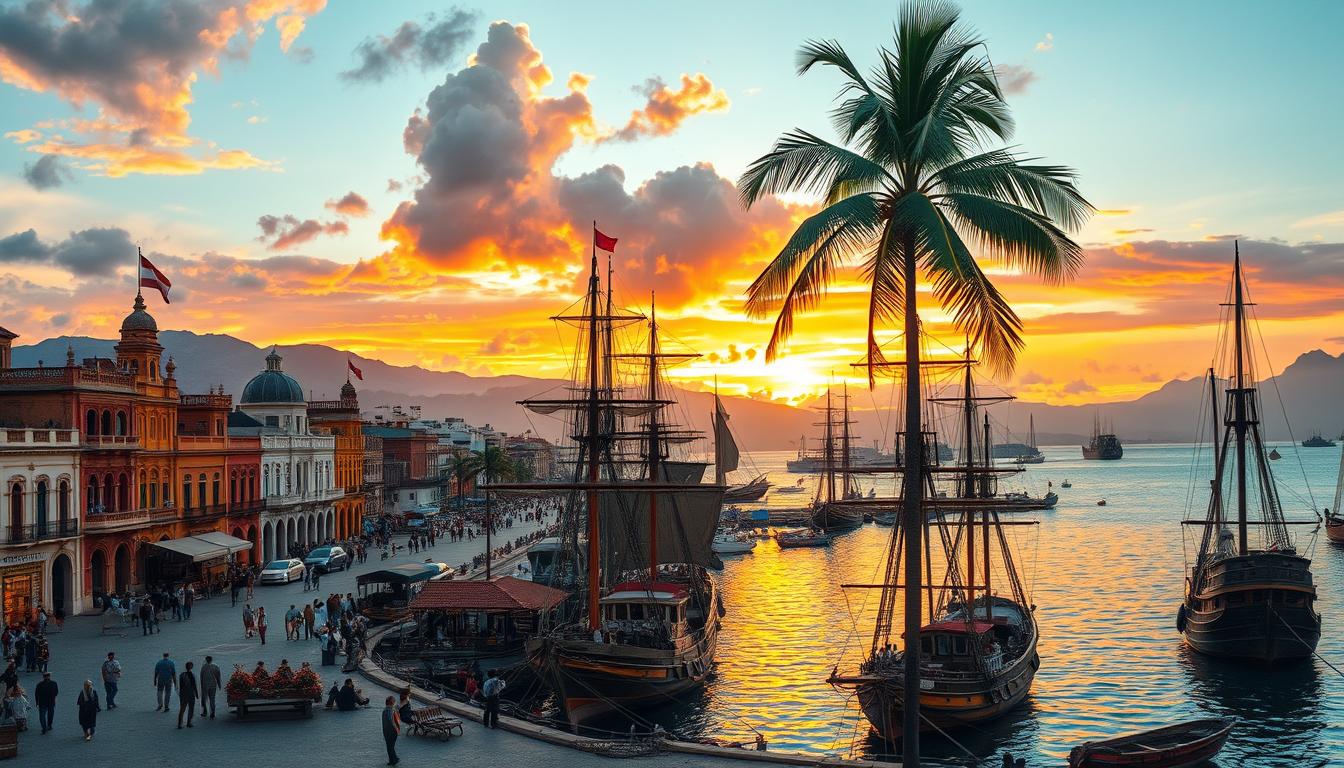
Cartagena quickly became a key port as the Spanish Empire grew. It played a big role in trade, commerce, and defense. Its location on Colombia’s Caribbean coast made it perfect for moving goods between the Americas and Europe.
The Importance of the Port for Trade and Commerce
The port of Cartagena was always busy. Ships came from all over the Spanish Empire. They brought goods like gold, silver, emeralds, tobacco, and sugar.
Merchants and traders made a lot of money here. The port connected the Spanish Main with the rest of the empire.
The table below shows some of the key goods traded through Cartagena during the Spanish colonial era:
| Goods | Origin | Destination |
|---|---|---|
| Gold and silver | Peru, Mexico | Spain |
| Emeralds | Colombia | Spain, Europe |
| Tobacco | Caribbean islands | Spain, Europe |
| Sugar | Caribbean islands | Spain, Europe |
Cartagena’s Strategic Role in the Defense of the Spanish Main
Cartagena was also a key defense point for the Spanish Empire. Its fortifications protected the port and the Spanish Main from attacks. This included rival European powers and pirates.
The Spanish spent a lot on Cartagena’s defense. They built walls, castles, and batteries. These helped keep the city and its people safe. They also protected the valuable goods passing through the port.
“Cartagena’s importance as a port city cannot be overstated. It was the lifeblood of the Spanish Empire in the Caribbean, connecting the Old World with the New and ensuring the flow of wealth and resources that sustained the empire’s power and influence.”
The Fortifications of Cartagena: A Testament to Its Strategic Importance
Cartagena was a key port in the Spanish Empire. It needed strong defenses to keep its wealth and strategic spot safe. The Spanish built a vast network of Cartagena fortifications. These show off impressive military architecture and are now a UNESCO World Heritage Site.
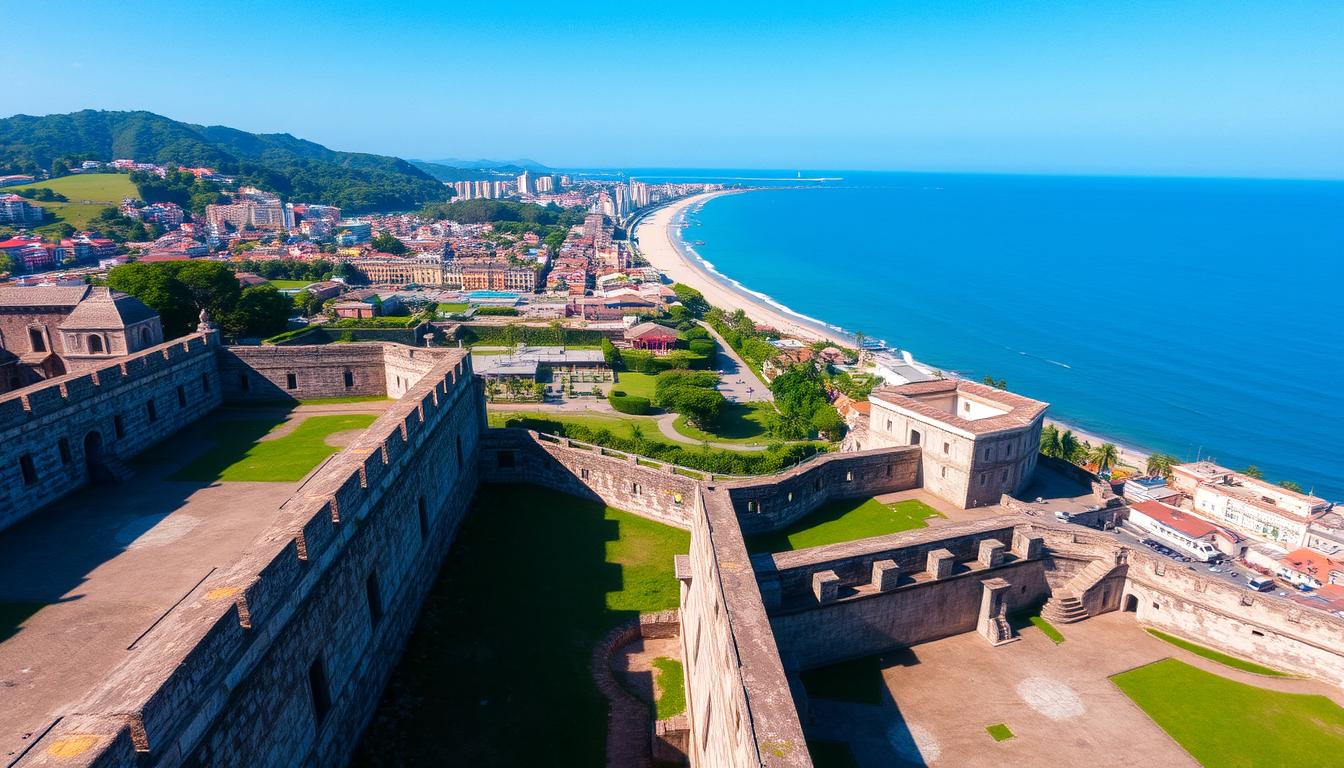
The Castillo San Felipe de Barajas is the most famous fortress. It was built in the 17th century. This massive fortress has tunnels, ramps, and battlements to fight off attacks.
“The Castillo San Felipe de Barajas is a masterpiece of Spanish military engineering, a testament to the ingenuity and resilience of Cartagena’s defenders.”
Other important fortifications include:
| Fortification | Construction Date | Key Features |
|---|---|---|
| Castillo de San Fernando de Bocachica | 18th century | Guarded the entrance to the bay |
| Batería del Ángel San Rafael | 18th century | Protected the city’s northeastern flank |
| Baluarte de Santa Catalina | 17th century | Defended the historic city center |
These Cartagena fortifications kept the city safe from pirates and invaders. They also showed Spanish power in the Caribbean. Today, they remind us of Cartagena’s rich history and its strong spirit.
Cartagena’s Slave Trade and African Influence
Cartagena was a key port in the Spanish Empire, deeply involved in the slave trade. It was a major spot for the sale and transport of enslaved Africans. These people were brought to the Americas to work on plantations and in other jobs. This dark period in Cartagena’s history has shaped the city’s identity and cultural heritage.
The Role of Cartagena in the Transatlantic Slave Trade
Cartagena’s location on the Caribbean coast made it perfect for the slave trade. Ships carrying enslaved Africans arrived, and they were sold at auctions. Then, they were sent to various places in the Americas. It’s estimated that over a million enslaved Africans passed through Cartagena between the 16th and 19th centuries.
“The history of the transatlantic slave trade is deeply intertwined with the history of Cartagena. The city’s prosperity and growth were built on the backs of enslaved Africans, whose forced labor and suffering cannot be forgotten.”
The Impact of African Culture on Cartagena’s Identity
Despite the harsh conditions of slavery, enslaved Africans in Cartagena kept parts of their cultures alive. Over time, these African influences have become a big part of Cartagena’s identity. They have shaped the city’s music, dance, food, and religious practices. Here are some key African contributions to Cartagena’s culture:
| Cultural Element | African Influence |
|---|---|
| Music | Rhythms like champeta and mapalé, derived from African drumming traditions |
| Dance | Dances like cumbia and bullerengue, with African roots |
| Cuisine | Dishes like coconut rice and fried fish, influenced by African cooking techniques |
| Religion | Syncretic practices like Santería, blending African spirituality with Catholicism |
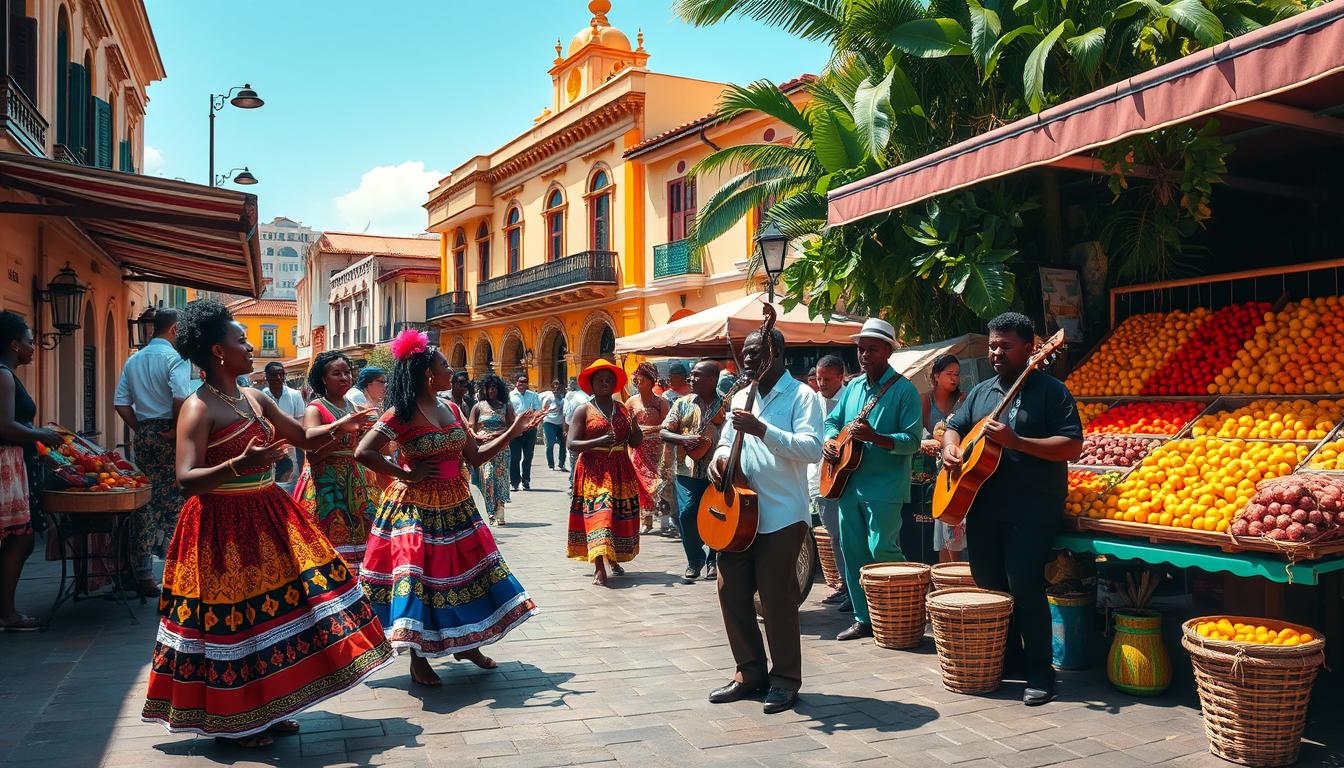
Today, visitors to Cartagena can see the African influence in the city’s culture. From the lively street music to the colorful palenqueras selling fruit, it’s all around. While the legacy of slavery is painful, the cultural contributions of Afro-Colombians have enriched Cartagena’s heritage and identity.
The Inquisition in Cartagena: Religious Persecution and Control
In the colonial era, the Spanish Inquisition cast a dark shadow over Cartagena. It did the same in many parts of the Spanish Empire. The Inquisition, a powerful arm of the Catholic Church, aimed to keep religious beliefs in line through fear and persecution.
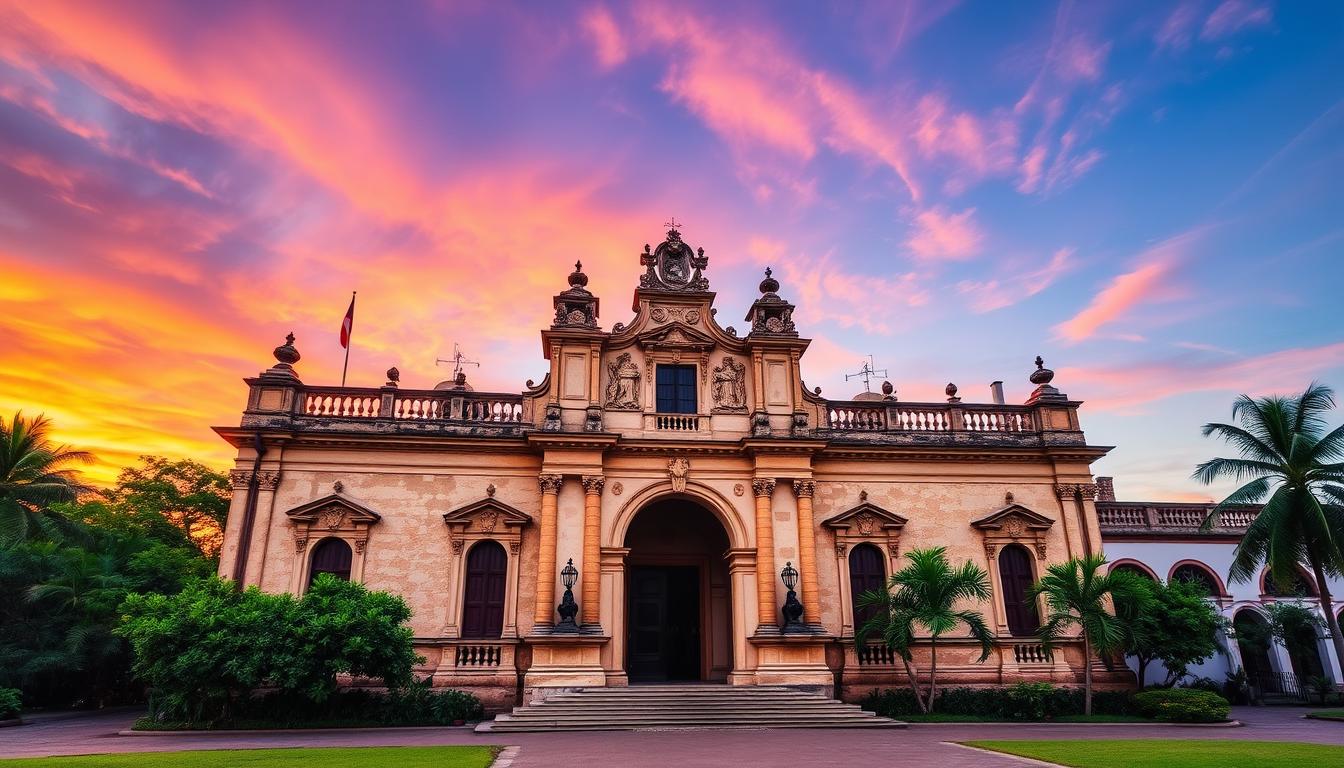
The Palace of the Inquisition stands in Cartagena’s historic center. It’s a reminder of a troubled past. Built in the late 16th century, it was the Inquisition’s base in the city.
Here, suspected heretics faced interrogation and trial. These were people who followed other religions or were accused of blasphemy.
The Inquisition’s methods were cruel and unfair. Torture was common to get confessions. The accused rarely got to prove their innocence. The fear of the Inquisition was real, affecting everyone in Cartagena and its port.
“The Inquisition was a kind of thought police, dedicated to weeding out ideas and practices considered anathema to the one true faith.”
– Alan Taylor, historian
The Inquisition deeply affected Cartagena’s society. It created a climate of suspicion and mistrust. Neighbors and family members could be accused of heresy.
This fear stifled growth and diversity. Conforming to Catholicism became crucial for survival.
Today, the Palace of the Inquisition is a museum. It shows visitors the dark side of Cartagena’s history. The building’s ornate facade contrasts with the city’s vibrant, welcoming spirit today.
Pirates, Buccaneers, and the Sacking of Cartagena
Cartagena’s wealth and strategic location made it a target for pirates and buccaneers. These raiders, sometimes backed by rival European powers, attacked the city many times. They tested the city’s defenses and the people’s resilience.
Famous Pirates and Their Attacks on the City
Sir Francis Drake, an English sea captain, is one of the most famous pirates to attack Cartagena. In 1586, he led a fleet of 23 ships and 3,000 men. They fought hard, took the city, and stayed for two months, looting and burning before leaving.
Other famous pirates who attacked Cartagena include:
- Jean-François Duclerc (1697)
- Edward Vernon (1741)
- Charles Vane (1718)
- Francis Spriggs (1726)
“It is a great error to suppose that piracy has been completely stamped out as the world has become more civilized.” – David Cordingly, “Under the Black Flag”
The Resilience of Cartagena in the Face of Adversity
Despite many attacks, Cartagena’s people showed great resilience. They worked hard to rebuild and strengthen their city’s defenses after each raid. They fixed the damage and made the walls, castles, and batteries stronger.
| Pirate/Buccaneer | Year of Attack | Outcome |
|---|---|---|
| Sir Francis Drake | 1586 | City occupied and looted for two months |
| Jean-François Duclerc | 1697 | Attack repelled by city defenders |
| Edward Vernon | 1741 | City besieged but not captured |
The people of Cartagena’s determination and the city’s strong defenses helped it stay a key Spanish power in the Caribbean for centuries.
Cartagena’s Fight for Independence from Spain
In the early 19th century, South America saw big changes. The Colombian independence movement was growing strong. Cartagena, known for its courage, was key in this fight against Spanish rule.
The people of Cartagena wanted freedom and self-rule. They challenged the Spanish crown. The city was full of secret groups and clubs planning to take down the colonial government.
The Rise of the Independence Movement in Cartagena
Cartagena’s location and wealth made it a crucial spot in the fight for Colombian independence. Leaders like Antonio José de Ayos and Manuel Rodríguez Torices worked hard to gain support.
On November 11, 1811, Cartagena declared freedom from Spain. This move encouraged other areas to fight for their freedom too.
Key Figures in Cartagena’s Struggle for Freedom
Cartagena’s independence movement was led by brave and smart people. Simón Bolívar, the famous South American liberator, was a key player in this fight.
“The art of victory is learned in defeat.” – Simón Bolívar
Other important figures included:
- Manuel Rodríguez Torices, a lawyer and politician who was the first president of the Free State of Cartagena
- Juan Fernández de Sotomayor, a priest and thinker who helped write Cartagena’s independence declaration
- María Concepción Loperena, a wealthy landowner who supported the independence movement financially and with shelter
These heroes, along with many others, helped Cartagena win its freedom from Spain. They are remembered as key figures in Colombian independence.
| Key Event | Date |
|---|---|
| Cartagena declares independence from Spain | November 11, 1811 |
| Simón Bolívar arrives in Cartagena | May 22, 1812 |
| Spanish forces lay siege to Cartagena | August 1815 – December 1815 |
| Cartagena liberated by Bolívar’s forces | October 10, 1821 |
Cartagena history: 19th and 20th-Century Developments
Cartagena moved past its colonial days and into freedom in the 19th and 20th centuries. This time was filled with big changes. The city became a bustling center of business and growth, shaping its current identity.
The 19th century was a time of big urban development for Cartagena. The city grew, with new areas and buildings popping up. Famous spots like the Clock Tower and the Heredia Theater were built, making Cartagena even more beautiful.
Cartagena’s location and port were key to its industrial growth in the 20th century. It became a major place for making things, from clothes to food. The port grew, helping trade and making Cartagena a big economic player in Colombia.
The table below shows some key changes in Cartagena during these times:
| Century | Development | Impact |
|---|---|---|
| 19th | Expansion beyond historical walls | New neighborhoods and districts emerge |
| 19th | Construction of iconic landmarks | Clock Tower and Heredia Theater add to architectural splendor |
| 20th | Growth of manufacturing industries | Textiles and food processing establish presence |
| 20th | Expansion of port infrastructure | Boosts trade and commerce, solidifies economic position |
Cartagena faced ups and downs, like economic changes and social issues. But it kept going strong. Its rich culture and growing economy made it a key part of modern history in Colombia and the Caribbean.
Cartagena’s transformation in the 19th and 20th centuries is a testament to its enduring spirit and ability to adapt to changing times.
The Transformation of Cartagena into a Tourist Destination
Over the past few decades, Cartagena has changed a lot. It’s now a top tourist spot in the Caribbean. The city’s mix of history, culture, and beaches draws visitors from everywhere, boosting tourism development.
Cartagena’s success as a Caribbean destination comes from its focus on historic preservation. The city has worked hard to keep its colonial buildings in great shape. This ensures the walled city stays true to its past. Visitors can see the colorful buildings and fortifications, giving them a peek into Cartagena’s history.
The Restoration and Preservation of Historical Sites
The government and private sector in Cartagena have teamed up to save its historical sites. They’ve worked on many projects, like:
- The Walled City: Restoring the ancient city walls and fortifications
- The Palace of the Inquisition: Renovating this famous building, now a museum
- The Clock Tower: Fixing up this iconic structure, a symbol of Cartagena’s strength
The Growth of Tourism Infrastructure and Services
Cartagena has grown a lot to welcome more visitors. Now, it has many places to stay, from fancy resorts to cozy hotels. There’s something for everyone, no matter their budget or taste.
| Year | Number of Hotel Rooms | Annual Tourist Arrivals |
|---|---|---|
| 2000 | 5,000 | 500,000 |
| 2010 | 10,000 | 1,200,000 |
| 2020 | 15,000 | 2,500,000 |
Cartagena also has more restaurants, bars, and places to have fun. Visitors can enjoy the city’s food and nightlife. There’s a wide range of dishes, from Colombian to international.
“Cartagena’s transformation into a world-class tourist destination is a testament to the city’s commitment to preserving its historical heritage while embracing the opportunities of the future.” – María Fernanda Lacouture, former Colombian Minister of Commerce, Industry and Tourism
Cartagena keeps investing in tourism development and historic preservation. It’s set to stay a top Caribbean destination for many years. Visitors will continue to be charmed by its beauty, culture, and friendly people.
Exploring Cartagena’s Historic Center: A Walking Tour
As I stepped into the vibrant streets of Cartagena’s Old Town, I was immediately captivated. The colonial architecture around me was enchanting. The Cartagena Old Town is a UNESCO World Heritage Site, showcasing the city’s rich history and cultural heritage.
My walking tour started at the iconic Clock Tower, marking the entrance to the walled city. I then walked through narrow, cobblestone streets. These streets were lined with colorful buildings, each with its own charm.
The balconies were adorned with bougainvillea, and lively street vendors added to the atmosphere. This made the Old Town even more special.
Visiting the Plaza de Bolívar was a highlight of my walking tour. This square is the heart of the historic center. It features a statue of Simón Bolívar, the liberator of much of South America.
Surrounding the plaza are significant buildings. These include the Palace of the Inquisition and the Cathedral of Cartagena. They showcase the city’s complex past and architectural grandeur.
“The beauty of Cartagena’s Old Town lies not only in its physical appearance but also in the stories and legends that are woven into its very fabric.”
As I explored further, I found hidden gems like the Abaco Bookstore and Café. This literary oasis is housed in a beautifully restored colonial building. The Old Town is full of surprises, inviting visitors to uncover its secrets at every turn.
The Cultural Legacy of Cartagena: Literature, Art, and Music
Cartagena’s rich history and vibrant culture have inspired many. Writers, artists, and musicians from around the world have been drawn to it. The city’s mix of Spanish, African, and indigenous influences has created a unique artistic tradition.
Gabriel García Márquez and the Influence of Cartagena on His Works
Gabriel García Márquez, the Nobel Prize-winning author, is closely tied to Cartagena. Born in Aracataca, he spent much of his youth in Cartagena. He drew heavily from the city’s history and culture in his works.
“In Cartagena, the air is so thick you can cut it with a knife.”
– Gabriel García Márquez
Many of García Márquez’s stories are set in a fictionalized Cartagena, called “Macondo.” He captured the city’s magical realism, blending the ordinary with the extraordinary. This has captivated readers worldwide.
The Vibrant Art Scene and Traditional Music of Cartagena
Cartagena’s art scene is thriving, with many galleries and museums. The city’s International Film Festival is a major cultural event, attracting filmmakers and cinephiles.
Music is a big part of Cartagena’s culture, with many traditional styles still alive today. Some popular genres include:
| Genre | Description |
|---|---|
| Cumbia | A folkloric dance and music style from Colombia’s Caribbean coast |
| Vallenato | A folk music style from the Colombian Caribbean, featuring the accordion and other instruments |
| Champeta | A high-energy dance music style from Cartagena, blending African, Caribbean, and Latin American influences |
These musical traditions shape Cartagena’s cultural identity. They attract visitors from around the world who want to experience the city’s art and music scene.
Conclusion
Cartagena’s history is rich and varied. It started with indigenous people, then the Spanish came, and now it’s a Caribbean gem. The city’s role as a port and its fortifications are key parts of its story.
Cartagena faced many challenges, like pirate attacks and fights for freedom. Yet, it kept going strong. In the 19th and 20th centuries, it grew into a popular tourist spot. Today, it’s known for its historical sites and lively tourism.
The historic center of Cartagena lets visitors step back in time. The city’s culture, from Gabriel García Márquez’s books to its art and music, is captivating. Cartagena’s history is a mix of many cultures, making it special.
I encourage you to visit Cartagena. Dive into its history and culture. Make memories in this amazing city. Cartagena is ready to welcome you and share its story.
FAQ
What makes Cartagena, Colombia, such a historically significant city?
Cartagena, on Colombia’s Caribbean coast, has a rich history. It started with indigenous people and the Spanish conquest. It became a key port in the Spanish Empire and fought for independence. This history has shaped the region’s culture and history.
Who were the original inhabitants of Cartagena before the Spanish arrived?
The Calamari people lived in the area before the Spanish. They had their own culture and way of life. The Spanish conquest and the founding of Cartagena in 1533 changed their lives.
Why was Cartagena such an important port city for the Spanish Empire?
Cartagena became a key trade hub for the Spanish Empire. Its location made it vital for defending against rival powers.
What are some of the most notable fortifications in Cartagena?
The Spanish built many fortifications to protect Cartagena. The most famous is the Castillo San Felipe de Barajas. It’s now a UNESCO World Heritage Site.
How did the transatlantic slave trade impact Cartagena?
Cartagena was a major port for the slave trade. This dark period has left a lasting mark on the city. African culture still influences Cartagena’s traditions and customs.
What famous pirates attacked Cartagena throughout its history?
Pirates and buccaneers targeted Cartagena because of its wealth. Sir Francis Drake attacked in 1586. Despite these attacks, Cartagena’s people showed great resilience.
What role did Cartagena play in Colombia’s fight for independence from Spain?
Cartagena was a key center for Colombia’s fight for freedom. Leaders like Simón Bolívar fought against Spanish rule from there.
How has Cartagena transformed into a popular tourist destination in recent years?
Cartagena has become a top tourist spot in recent years. This is thanks to the restoration of its historical sites and the growth of tourism. Today, it’s a beloved Caribbean getaway with history, culture, and charm.