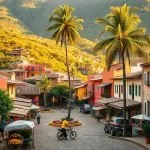
Why I Shop at the Mercado in Santa Marta
So the thing is, when people ask me about markets in Colombia, they usually expect me to talk about the big famous ones in Bogotá. But I don’t live in Bogotá. Since 2025 I rent an apartment in Santa Marta with my Colombian girlfriend, both our names on the lease, paying every month like everybody else, and I’ve been coming back to this city since 2022. So when we need groceries, a lot of the time we don’t go to the supermarket. We go to the mercado.
Why? Two reasons, basically. First, the prices are a bit lower than at the supermarket. Not as low as they used to be, and I’ll explain that later, but still lower. Second, and honestly this is the bigger one for me, I like to see how people actually live. The supermarket is the same everywhere in the world. The mercado is not. It’s loud, it’s messy, it’s not always clean, and that’s the reality, that’s life here. That’s what I want to see when I’m in another country.
Now I’m going to be honest with you right away, because I’d rather lose you here than have you angry at me later: the Santa Marta market is not for everybody. If you have a sensitive stomach, or sensitive eyes, some of what you see might bother you. I’ll tell you exactly what I mean.
Here’s what’s coming: what the Santa Marta market is really like, the meat situation (yes, there’s a cockroach story), what to buy, why you go at 4:30 in the morning, what prices look like in Canadian dollars then and now, my tips, the market in Cúcuta, the fresh juice I keep buying in El Rodadero, and then the other big markets in Colombia that are still on my list, with sources, because I haven’t been yet.
What the Santa Marta Market Is Really Like
First question people ask: where is it exactly? And I’ll be honest, I can’t give you a clean address. I just know how to get there. Any local can take you. Ask a taxi driver, ask your neighbor, ask the person at the front desk of your building, everybody knows the mercado santa marta people use for their groceries. That’s how it works here.
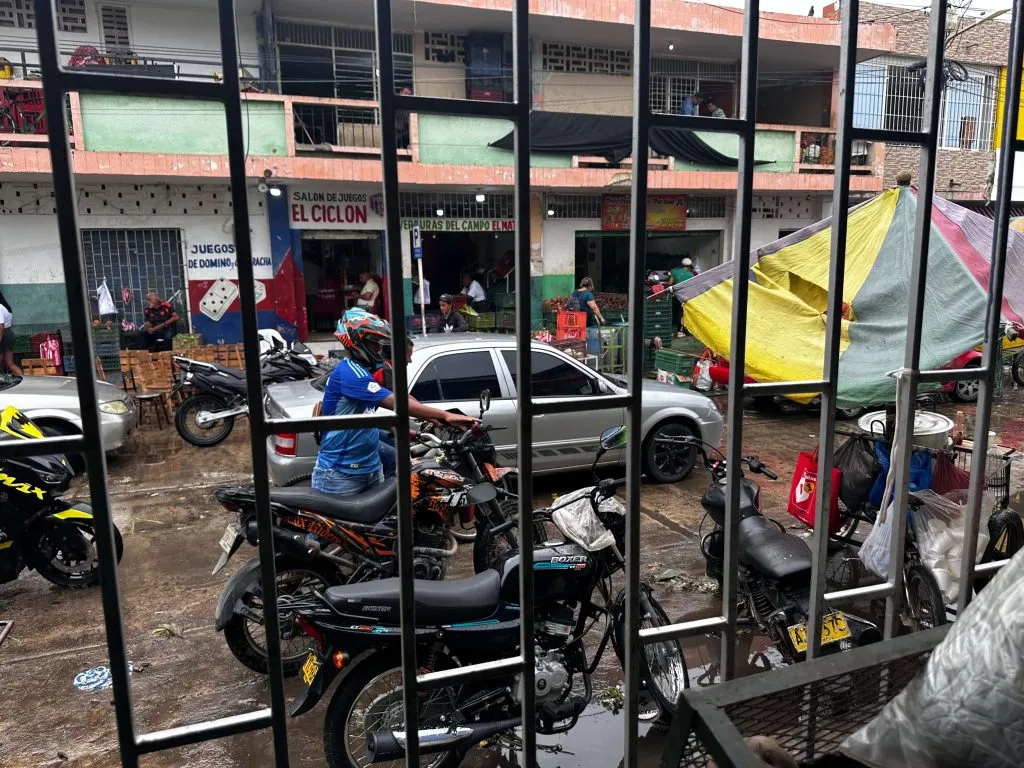
Once you’re inside, the word I use is chaotic. People everywhere, stalls everywhere, vendors calling out what they have and how much it costs, and you trying to figure out where to stand so you’re not in somebody’s way. It’s not organized the way a Canadian grocery store is organized, with an aisle number for everything. It’s more like you walk, you look, you ask.
Is it always clean? I won’t lie to you, it’s not always sanitary. And in the heat of Santa Marta, things don’t stay fresh by themselves. If you come from Canada, where everything is wrapped in plastic and sitting in a fridge, it’s a shock the first time.
But here’s the thing: I love the experience. I really do. You see how people shop, what they buy, how they talk to the vendors, people grabbing breakfast before they start. It’s real. Nobody built this for tourists. It’s one of the outdoor markets in Colombia that exists only because people need to eat, and that’s exactly why I like it.
What’s less fun: the heat, the crowd, and the hygiene. You need to accept all three before you go. And if you’re the type who gets stressed in a crowd, go with someone who knows the place.
Prices? I don’t have a receipt with item-by-item numbers to give you, and I’m not going to make some up. What I can tell you is the general picture, which I cover in the prices section below.
If you want to see what a market like this looks like, here’s a video:
Meat and Hygiene: The Cockroach on the Counter
OK, so this is the part where some of you are going to close the tab. That’s fine.
At the mercado santa marta, the meat is not always handled the way you’d expect. In some places, the meat is out in the open, in the heat. Are those the best conditions? I don’t think so. In other places, it’s refrigerated, and that makes a big difference. It’s the same story with fruits and vegetables, some sit out, some are kept cooler, but with produce it’s less of a problem because you’re going to wash it and peel it anyway.
Now the story. One time, someone we know brought us to a stall they recommended for meat. We’re standing there, we’re buying, the vendor is cutting, and I see a cockroach walk across the counter. Right there, next to the meat.
Did I like it? No. Did we buy the meat anyway? Yes. Did we wash it really well and cook it properly? Yes, absolutely.
But here’s the funny part. My girlfriend is Colombian, and I’m Haitian-Canadian, and you would think she’d be the one who shrugs it off. Nope. She was way less open than me. She said that was the last time she was buying meat there. Not the whole Santa Marta market, just that stall. And honestly? I can understand. I’m a bit more open than her about this stuff, it depends on the conditions, but I get it.
Back home in Canada, you just never see meat sitting out on a counter in the heat. That’s the difference you need to be ready for.
So what do I take from this, in practical terms:
- Look at how the meat is kept. If a stall has refrigeration, that’s a good sign. If the meat has been sitting out in the sun, think twice.
- Wash everything and cook it all the way. This is not the place for rare steak.
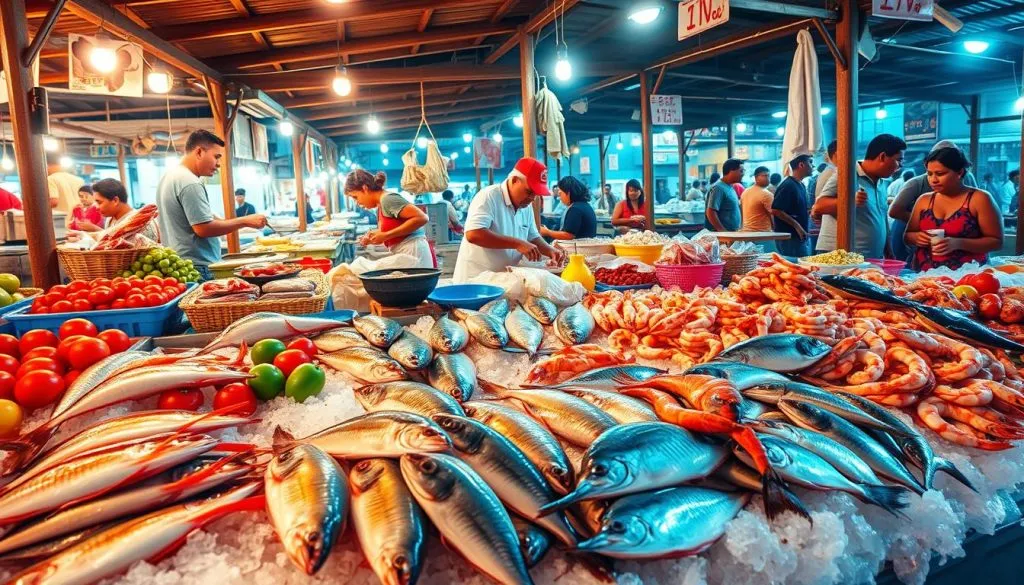
- For fish, use the usual freshness checks. Fish guides generally say to look for bright, clear eyes and firm flesh, and to buy from stalls that sell a lot, because high turnover means the product didn’t sit there for long.
- Trust your gut. If something looks wrong, there’s always another stall.
The seafood itself makes sense here, Santa Marta is on the Caribbean, so fish and seafood are everywhere on the coast. Just apply the same rules.
What to Buy at the Mercado Santa Marta
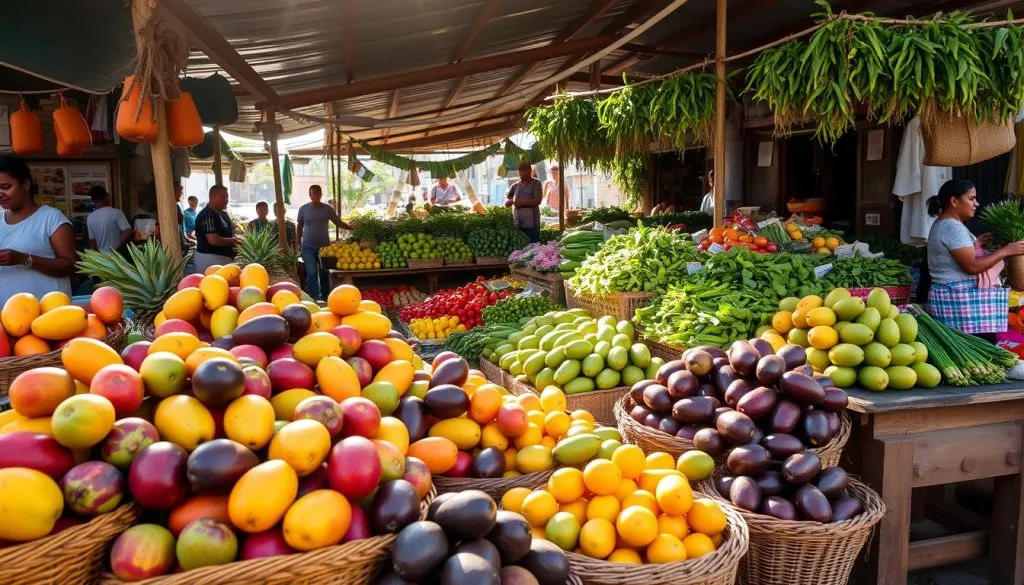
So what do you actually find at the Santa Marta market? Basically, everything you need to cook Colombian food at home. Here’s what you can expect to see.
Fruits and vegetables
- Plantains. OK, this is my department. Plantain is my favorite food in life, I’d trade meat for plantain any day. You’ll see them green (verde), half-ripe (pintón) and ripe (maduro), and each one is for something different. Green is for patacones, the smashed and fried plantain. Ripe is sweet and soft, you fry it as maduros. Coming from Haiti, patacón is very close to our bannann peze, except in Haiti it’s spicier, and we eat it with pikliz. If you’re Haitian and you’re reading this, you know.
- Yuca. A staple in Colombian cooking, boiled or fried.
- Tomatoes and onions. The base of half the dishes here.
- Mangoes. Good for snacking or in a salad.
- Maracuyá (passionfruit). Mostly for juice and desserts.
- Pineapples. Eat it fresh or grill it.
- Guanábana. A unique fruit people use for juice, smoothies and ice cream.
Meat and protein
- Colombian sausages and chicken. You’ll find both. Just read the section above before you choose your stall.
- Fish and seafood. It’s the coast, so this is a big part of what’s sold.
Pantry staples
For a real Colombian kitchen, stock up on rice, beans and corn. Those three show up everywhere.
Specialty items
| Product | Description |
|---|---|
| Queso Fresco / Queso Costeño | Fresh white cheese; queso costeño is the salty version from the Caribbean coast |
| Chorizo Colombiano | Colombian pork sausage, seasoned with spices |
A quick correction to what you’ll read on other sites, including the older version of this page: ají amarillo is a Peruvian pepper, not a classic Colombian ingredient, so I took it off the list.
Is this one of the best markets in Colombia? I can’t rank it against places I haven’t been. What I can say is that if you live on the coast and cook, it has what you need.
I’m not putting prices per item here. I don’t have them written down, and I’d rather give you nothing than give you a fake number. For the whole food side of Colombia, read our guide to top Colombian foods you must try.
Santa Marta Market Hours: Why You Should Go at 4:30 a.m.
Yes, 4:30 in the morning. I’m not joking.
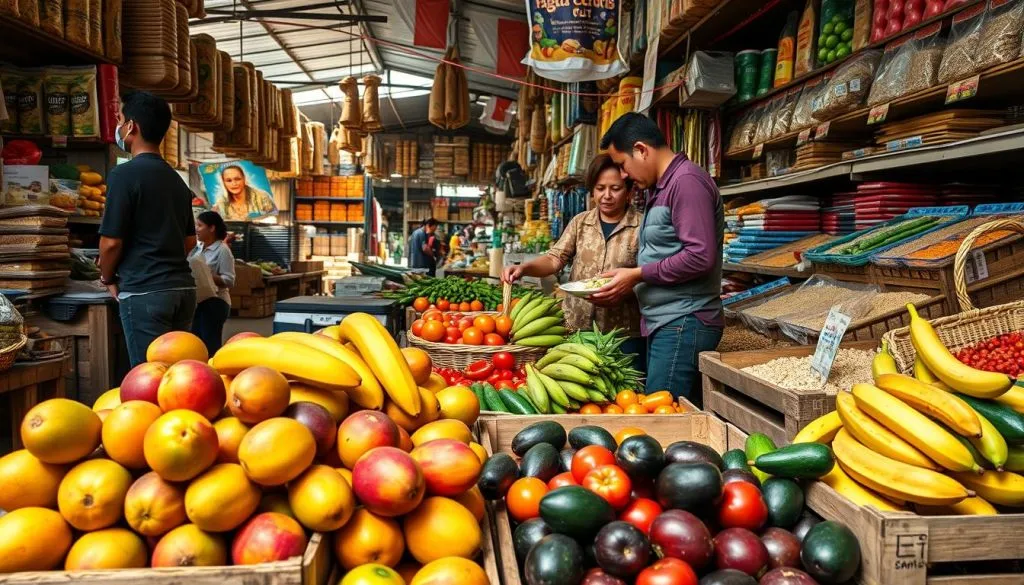
From what I’ve seen, at 4:30 a.m. everything is already set up at the Santa Marta market. The stalls are full, the vendors are ready, and you can choose from everything. Then it starts closing around 9 or 10 a.m. If you show up at noon thinking you’ll do your groceries, you’re going to be disappointed.
And trust me, I’m not a morning person. I’m the guy whose phone is always at three percent. But for the mercado, early is the rule.
Here’s the simple version:
| Time | What you’ll find |
|---|---|
| From 4:30 a.m. | Everything is set up, full choice, and it’s cooler |
| Around 9:00–10:00 a.m. | Vendors start closing |
Why so early? I’ve never asked a vendor to explain the supply chain to me, so I’ll say it carefully: it probably has to do with produce arriving from farms overnight and with the heat. In Santa Marta, by late morning the sun is serious, and fresh food, especially meat, doesn’t like that. It makes sense to buy and sell before it gets hot. But that’s my guess, not something a vendor told me.
As for the best time of year, I can’t give you a season. I go when I need groceries, all year. The hour matters more than the month.
So the plan is simple: set the alarm, take a taxi, have a little breakfast at the market, do your shopping, and be home before the city really heats up. The rest of your day is free, and you can go to the beach.
Santa Marta Market Prices Then and Now, in Canadian Dollars
This is the part I care about the most, because nobody else writes it this way. Almost every guide in English thinks in US dollars. I’m Canadian, I’ve been coming back to Colombia since 2021, so I’ve watched the same currency move over five years.
In 2021, my Canadian dollar was getting me between 3,100 and 3,300 pesos. Today, it feels like 2 to 1. That’s how I say it: it used to be more than 3 to 1, now it’s more like 2 to 1, around 2,000 pesos for one Canadian dollar, from what I see.
For a sourced number: currency.wiki showed 1 CAD = 2,274.59 COP on August 5, 2026. On the US side, Colombia’s official rate (the TRM) was 3,181.74 COP per US dollar on October 14, 2026, according to Portafolio. Exchange houses apply their own margin on top, so what you actually get will be a little worse.
So what does that mean at the Santa Marta market? The market is still cheaper than the supermarket. That part hasn’t changed. But, and this surprised me, sometimes the prices look a lot like Canadian prices. Strange, right? You’re in Colombia, at a local market, and you’re doing the math in your head and thinking, this is almost what I’d pay in Montreal. That’s because the Canadian dollar just doesn’t go as far as it did. When it was 3 to 1, everything felt cheap. At 2 to 1, some things feel normal.
The general reason markets are cheaper than supermarkets is simple: a lot of what’s sold is grown locally, there’s less packaging, less transport, fewer middlemen. That logic still holds. It’s just that the exchange rate ate a big part of the advantage for people like me who earn in Canadian dollars.
You’ll see older articles, including the first version of this one, promising that you’ll pay half of what you pay in Canada for a full shopping. I removed those numbers. They weren’t backed by a receipt I can show you, and they don’t match what I see today. If I ever sit down with a real receipt, I’ll put the real numbers here.
If you’re looking at the Santa Marta, Colombia cost of living for a long stay, here’s my honest take: the market helps, but don’t build your budget on the 2021 exchange rate. Look at today’s rate, and expect some things to cost close to what they cost at home.
For how this plays out over a longer stay, I wrote about my first three months living in Medellín, back when the rate was very different.
Tips for Shopping at a Colombian Market: Go Early, Bring Cash, Go With a Local
These are the tips I’d give a friend before their first time at one of the markets in Colombia.
1. Go early. I said it already, but it’s the most important one. From 4:30 a.m. everything is there; around 9 or 10 a.m. it starts closing.
2. Go with a local. The first time we went to that meat stall, it’s because someone we knew brought us there. A local knows which stall is good, which one to avoid, and how much things should cost. If you don’t know anybody, a taxi driver can at least take you to the mercado santa marta locals use, and any neighbor can give you a name or two.
3. Bring cash, in small bills. I learned that one in Cartagena, not at a market but with fruit vendors on the street. I had no cash on me and I ended up walking around looking for a Davivienda ATM. Don’t be me. At small stalls, plan on paying in pesos.
| Payment Method | Notes |
|---|---|
| Cash (Colombian Pesos) | What you should plan to use; small bills help |
4. Check how the meat is kept, and wash everything. Refrigerated is better. Cook it well.
5. Watch your stuff. It’s crowded. Phone in your front pocket, bag closed, no valuables you don’t need. Like any crowded place, really.
What to bring:
- Reusable bag
- Comfortable shoes
- Colombian pesos
- Water bottle
- Snacks, if you need them
Spanish that helps: even if some vendors speak a bit of English, a few words go far. Hola, ¿cómo está? (Hello, how are you?) and ¿Cuánto cuesta? (How much does it cost?). For a discount, the polite version is ¿Me puede dar un descuento? (Can you give me a discount?). I didn’t speak Spanish when I first came to Colombia, so believe me, even badly pronounced, people appreciate the effort.
About bargaining: I’m not going to pretend I’m a big negotiator at the mercado. What guides usually say, and it makes sense, is that there’s more room on fresh produce, meat and seafood when you buy a larger quantity, and very little room on packaged goods or food that’s already prepared. If you try, smile, say hello, show interest in what they sell. Building a relationship with a vendor you come back to every week is worth more than saving a few pesos once.
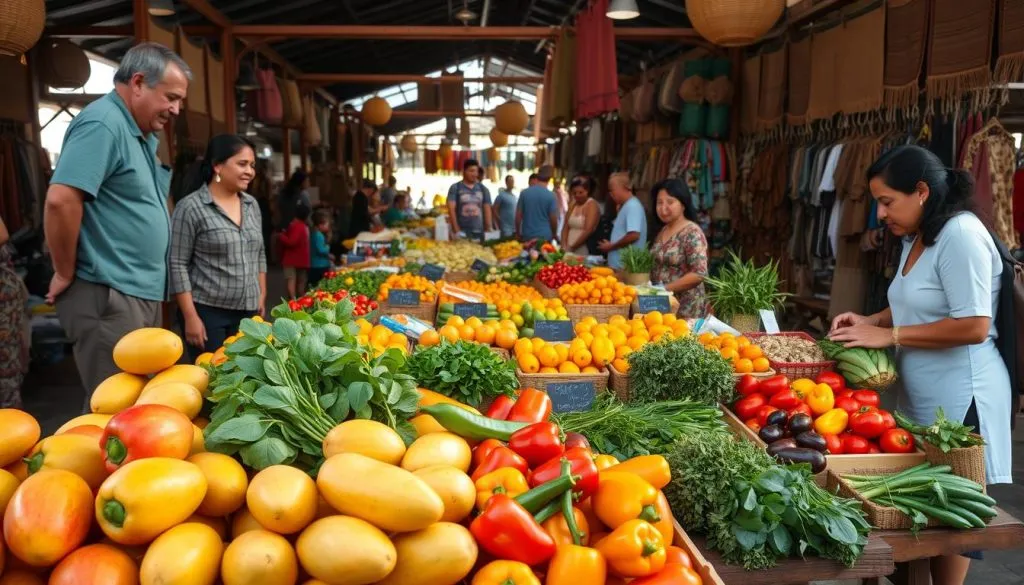
Breakfast at the Market
One thing I like: there are always small spots to eat breakfast before you start shopping at the mercado santa marta. When you’re there that early, you need it, and you eat next to people who’ve been working since before you woke up.
Arepas are the classic Colombian breakfast you’ll see around the country. Some older guides also mention changua, but that’s a milk-and-egg soup from Bogotá and the highlands, not really a Caribbean coast thing, so don’t expect it here.
Also, a little observation about food in Colombia in general, at least the way I’ve known it: people eat heavy. Lots of starch, rice, potato, yuca, plantain, and not that many vegetables, even with all the produce you see at the market. That’s funny to me, because the market is full of vegetables. Coming from Canada, I notice it.
The Market in Cúcuta
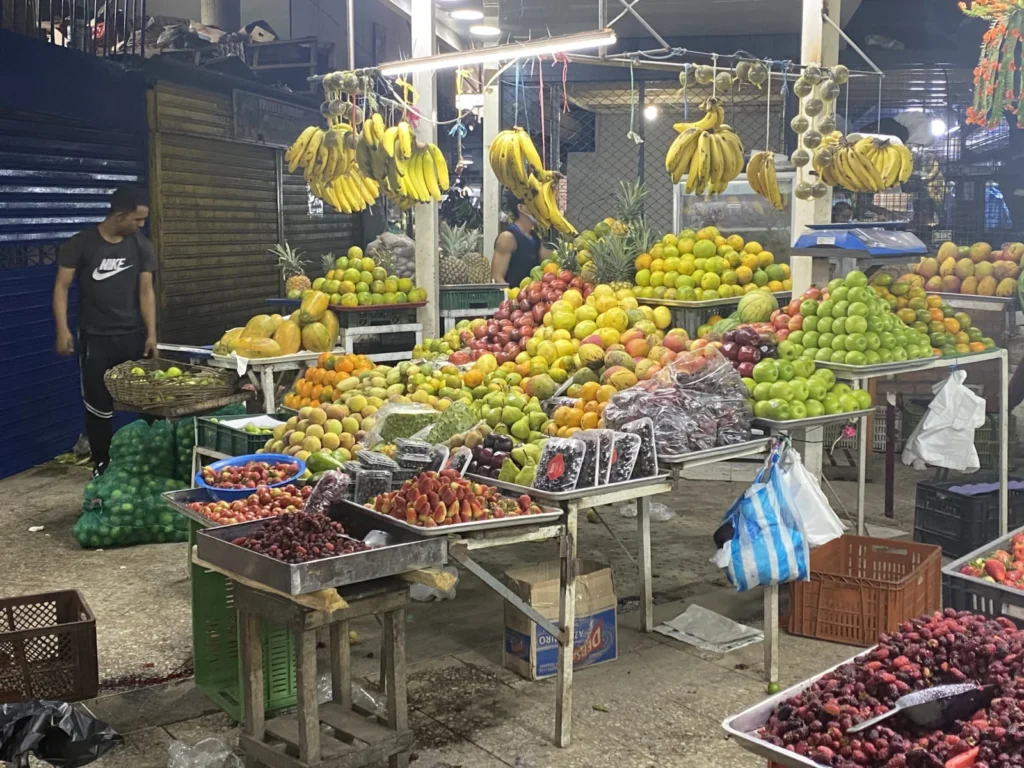
The market in Cúcuta, 2022.
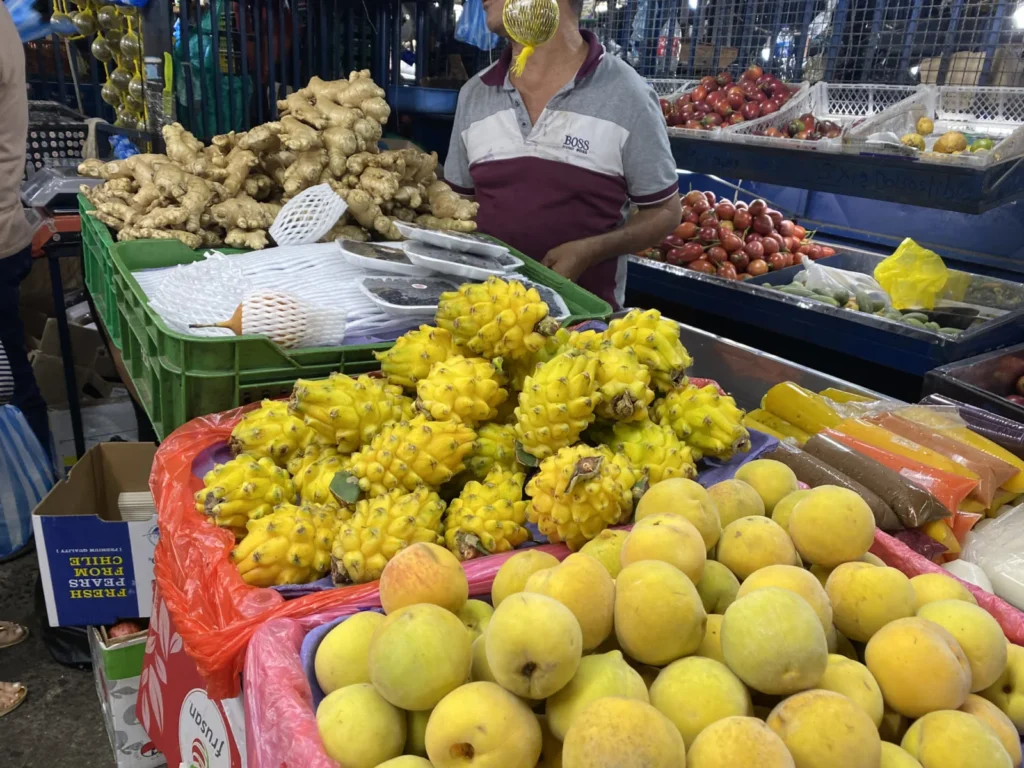
Fruit at the Cúcuta market, 2022.
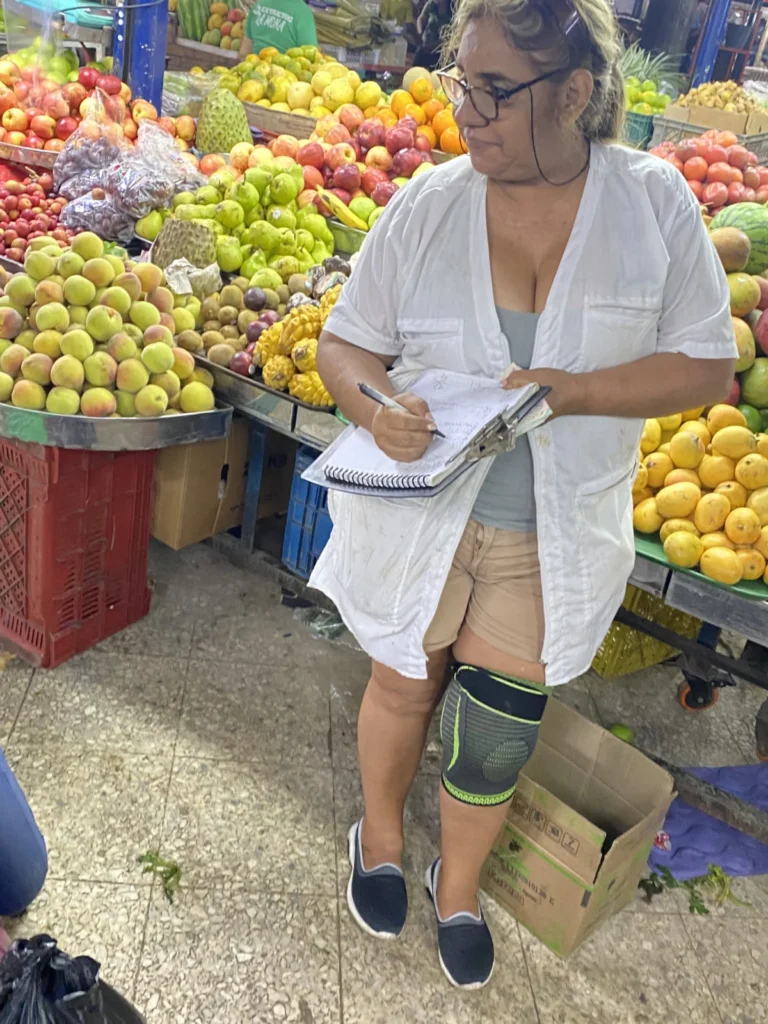
A vendor in Cúcuta, 2022.
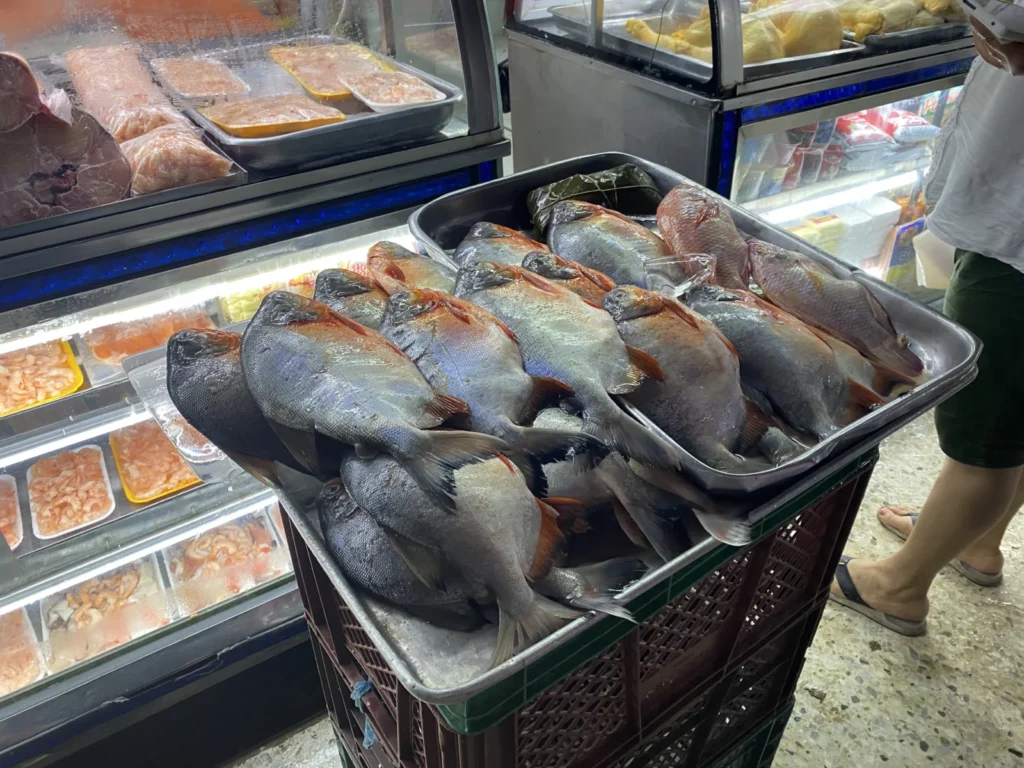
Fish at the Cúcuta market, 2022.
Santa Marta isn’t the only market I know. I’ve also been to Cúcuta, in Norte de Santander, which is where my girlfriend’s family’s cooking comes from.
The market there works the same way as in Santa Marta: from 4:30 in the morning everything is up and running, and it starts closing around 9 or 10 a.m. Same rule: if you want to see it, you get up early.
The food from that region is also part of how I understand Colombian cooking. My girlfriend cooks the way people cook in Norte de Santander, with even more starches and fewer vegetables. I’m not complaining, I like starches, I’m the plantain guy.
And one thing I remember from Cúcuta is the lime juice near the main park. In a lot of Colombian towns, the main park faces a church, and that’s where you’ll find people selling fresh juice. It’s a good stop after the market.
That’s all I’ll say about Cúcuta for now. It’s one of the outdoor markets in Colombia I’ve seen with my own eyes, and it confirmed what I already knew from Santa Marta: the market belongs to the early morning.
Fresh Juice: Limonada in El Rodadero and Other Food Lessons
If you want to understand why I love Colombia, start with the juice.
In El Rodadero, in Santa Marta, there’s a vendor selling lime juice that I’ve bought from. About 2 liters for 5,000 COP. At the August 2026 rate I cited above (2,274.59 COP per CAD), that’s roughly 2.20 Canadian dollars, and at the October 14, 2026 TRM it’s roughly 1.60 US dollars. Two liters. Even with the peso stronger now, that’s one place where it still feels like a good deal to me.
And it’s not just lime. I love fresh juice in Colombia in general: lulo, fresh orange juice squeezed in front of you on the streets of Laureles in Medellín and in Cartagena, and lime, always lime when it’s hot. Most markets in Colombia, the Santa Marta market included, have someone making juice.
The other food lesson from the coast: it’s Caribbean food. Fish, seafood, and these small beach restaurants built with two or three planks of wood, Nothing fancy, and that’s the point. If you want to explore more of the coast, check out our list of coastal towns in Colombia, and if you’re heading toward the park, our guide to Tayrona National Park.
Cooking With What You Buy at the Market
When you shop at the Santa Marta market, you’re going to come home with a lot of fresh stuff and no plastic wrap. A few basic habits help:
- Portion before you cook. Cook what you’ll eat, so the rest stays fresh longer.
- Store produce properly. Airtight containers or bags help keep fruits and vegetables from drying out. Herbs like cilantro and parsley keep for about a week in a jar of water, covered with a plastic bag.
- Use the most fragile stuff first. In the heat, it goes fast.
Recipes? Three that come up a lot:
- Patacones. Green plantain, fried, smashed, fried again. My terrain. If you only cook one thing from the market, cook this.
- Ajiaco. A traditional chicken soup with potatoes and corn. To be fair, it’s a Bogotá dish, not a coastal one, but you’ll find what you need to make it.
- Bandeja paisa. A platter with rice, beans, ground beef, chorizo, fried egg, plantain and avocado. It’s from the Medellín region. My first bandeja paisa ever was in 2021, during an outing with my Spanish school in El Centro, Medellín. Heavy, like I said about Colombian food. More ideas in our Medellín guide.
Markets I’ve Walked Through in Medellín
In Medellín, I’ve walked through the Placita de Flórez and a packed street market downtown. Same energy as the mercado, different city.
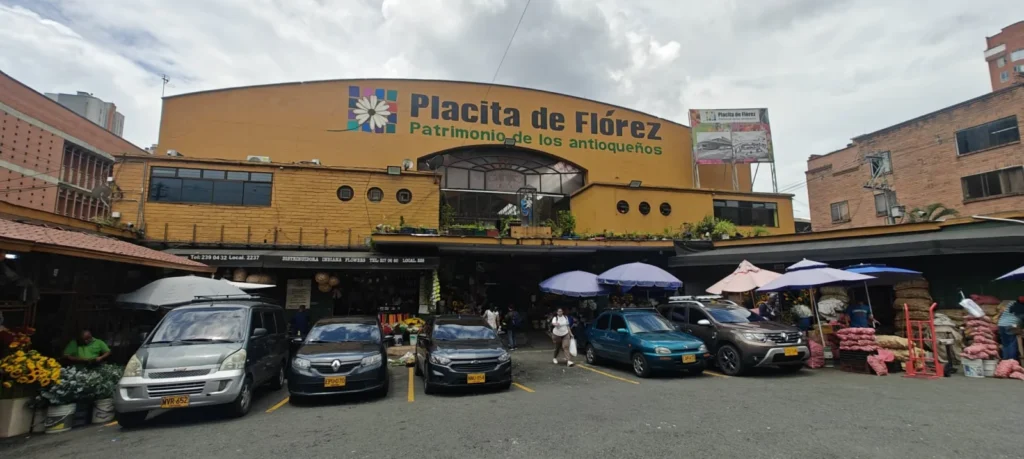
Placita de Flórez, Medellín, 2024.
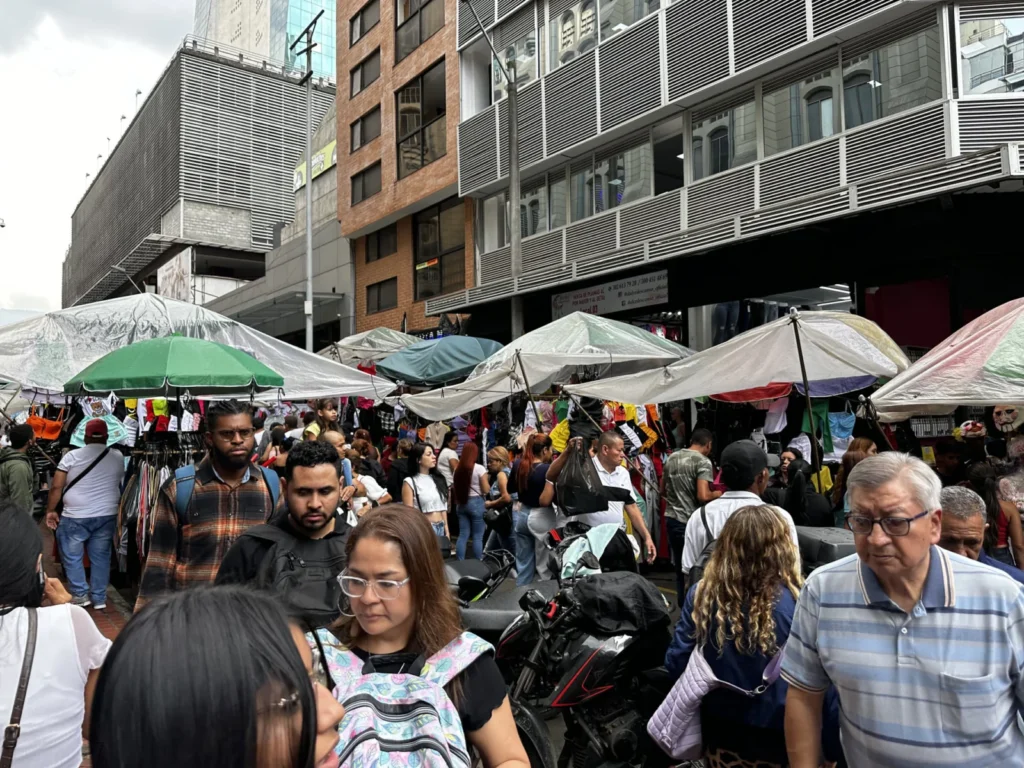
A street market in Medellín, 2022.
Other Markets in Colombia (I Haven’t Been Yet)
Five years of coming back to Colombia, and there are still a lot of places on my list. These are four of the best markets in Colombia according to the guides, and I haven’t been to any of them yet. So from here on, it’s research, with sources, not my experience.
Paloquemao Market, Bogotá
Paloquemao is the market that shows up first when you search for markets in Colombia. It’s Bogotá’s big market hall, known for its fruit and its flower section.
According to a Colombia Moving guide checked on July 23, 2026, it’s at Av. Calle 19 No. 25-04, reachable via the CAD TransMilenio station or nearby SITP routes. The same guide gives Monday to Saturday 4:30 a.m. to 4:30 p.m., and Sundays and holidays 5:00 a.m. to 2:30 p.m., with the flower sector usually done by 11:00 a.m. So same lesson as Santa Marta: go early.
Cost: entry is free, and stall prices vary. The guide notes many stalls show prices per libra (500 grams), which helps you avoid surprises. Point to watch: the guide gives no specific safety warning for Paloquemao, but recommends keeping valuables discreet, carrying limited cash and planning your ride home in advance.
Usaquén Flea Market, Bogotá
If you’re searching for flea markets or Sunday markets in Colombia, this is the one people talk about. The Usaquén market is in Usaquén, a former small town that Bogotá absorbed.
Uncover Colombia places the market around Carrera 7 119b-33 and describes it as a place where “many high quality handicrafts can be found for a reasonable price,” with lots of food options and restaurants around. It’s an outdoor, weekend-style market, and the main day is Sunday. Guides don’t all agree on exact days and hours, so check before you go.
Cost: no entry fee that I’ve seen mentioned; vendors set their own prices. Point to watch: Uncover Colombia warns that these places get really crowded, and suggests walking, taking a taxi or public transport rather than driving. In a crowd like that, keep your phone in your front pocket.
Bazurto Market, Cartagena
Here’s a funny one. I’ve been to Cartagena at least four times, I’ve walked the walls, stayed in El Centro and in Bocagrande, and I still haven’t been to Bazurto. So this one is on my list, and from everything I read, it’s the closest thing to the Santa Marta market in raw energy.
Bazurto is Cartagena’s big popular market. A Nomado guide puts it about 4 km outside the historic center, in a working-class area with little tourist traffic outside food tours, and suggests a taxi or ride-hailing app, about 10 to 20 minutes from the Centro Histórico. It suggests weekday mid-morning as the most manageable time.
Point to watch: visitors describe it as chaotic and warn about pickpockets. And in December 2025, Publimetro reported a serious fire that destroyed several stalls, so check the current state before you go. My advice, same as Santa Marta: go with a local. For the rest of the city, see our things to do in Cartagena.
Plaza Minorista, Medellín
I lived three months in Medellín in 2021, first in El Poblado and then in Laureles, and I never made it to Minorista. I know. All the people said I was crazy for going to Colombia alone for three months, and I still missed the main market.
The Plaza Minorista José María Villa is at Carrera 55 #57-80, near the city center, according to Colombia.com (July 9, 2026), which lists it first among the city’s markets for fruits, vegetables, typical products and a good local lunch. Tour operators run exotic-fruit tastings there.
Cost: I didn’t find an official price or official hours, so I won’t give you any. Point to watch: it’s in the busy downtown area, so go in daylight, with a local or a tour if it’s your first time, and keep your phone out of sight. For safety in Colombia in general, read is it dangerous to travel to Colombia.
How Far Does Money Go in Colombia? $20, $100 and $1,000
People search this a lot, so let’s do the math with sourced numbers, not feelings.
The rates. The official US dollar rate (TRM) was 3,181.74 COP on October 14, 2026. For the Canadian dollar, 2,274.59 COP on August 5, 2026.
The reference point. Colombia’s monthly minimum wage for 2026 is 1,750,905 COP, plus a transport allowance of 249,095 COP, for 2,000,000 COP total, set by Decree 1469 of December 29, 2025.
| Amount | In pesos (approx.) | Compared to the 2026 minimum wage (1,750,905 COP) |
|---|---|---|
| US$20 | about 63,600 COP | about 4% |
| US$100 | about 318,000 COP | about 18% |
| US$1,000 | about 3,180,000 COP | about 1.8 times |
| C$100 | about 227,000 COP | about 13% |
Is $20 a lot in Colombia? For a local on minimum wage, it’s a real amount, a few percent of a whole month. For you, it’s a few juices and a market breakfast. Just to give you one real example from my life: 2 liters of limonada in El Rodadero cost me 5,000 COP. So $20 is a lot of limonada.
How much can $100 buy? About 318,000 pesos. That’s a good part of a week of groceries for a lot of families, but I won’t give you a fake basket. Prices change by city and by stall.
Is $1,000 a lot in Colombia? In local terms, yes, it’s almost twice the monthly minimum wage. But be careful: for a foreigner renting an apartment in a tourist city, it doesn’t stretch as far as people think. And from my Canadian side: in 2021 my dollar went more than three times further in pesos, now it’s more like two times. At the mercado, some prices now look like Canadian prices.
What is a must-buy in Colombia? The classic answers are coffee and handmade things like Wayuu mochilas (the woven bags from La Guajira). Older articles said you’d find mochilas and crafts at the Santa Marta market, but I can’t confirm that, so look in craft shops or markets like Usaquén. On coffee, start with our guide to Colombian coffee.
FAQ
What are the operating hours of the market in Santa Marta?
From what I’ve seen, everything is set up by 4:30 a.m., and vendors start closing around 9 to 10 a.m. Go early.
How do prices at the Santa Marta market compare to those in Canada?
It’s still cheaper than the supermarket in Santa Marta. But since the Canadian dollar went from more than 3,000 pesos in 2021 to around 2,000 to 2,300 today, some prices can look close to Canadian prices.
What can I buy with $90 CAD at the market?
At the August 2026 rate (2,274.59 COP per CAD), $90 CAD is about 205,000 COP. I don’t have a real receipt to show you what that buys, so I won’t invent a basket. Expect fruits, vegetables, some meat or fish, but check prices stall by stall.
Is it possible to negotiate prices at the market?
Guides say there’s some room on fresh produce, meat and seafood when you buy more, and little on packaged or prepared food. Be polite, and building a relationship with a regular vendor counts more than haggling.
What are some tips for first-time visitors?
Go early, go with a local, bring cash in small bills, wear comfortable shoes, bring a reusable bag, and learn ¿Cuánto cuesta?
Are there any food safety considerations?
Yes. Some meat is kept out in the heat, some is refrigerated: choose the refrigerated stalls when you can, wash everything, and cook meat all the way. I saw a cockroach on a meat counter once, so this is not theory.
Can I find international or specialty products at the market?
It’s mostly local products. For imported items, the supermarket is your better bet.
What else can I find beyond groceries?
There are small breakfast spots and juice everywhere around markets. For handicrafts and souvenirs, I’d look at craft markets like Usaquén in Bogotá rather than counting on the Santa Marta market.
How can I make the most of my visit?
Accept the chaos before you go, arrive by 4:30 or soon after, eat breakfast there, and go with someone who knows the place.