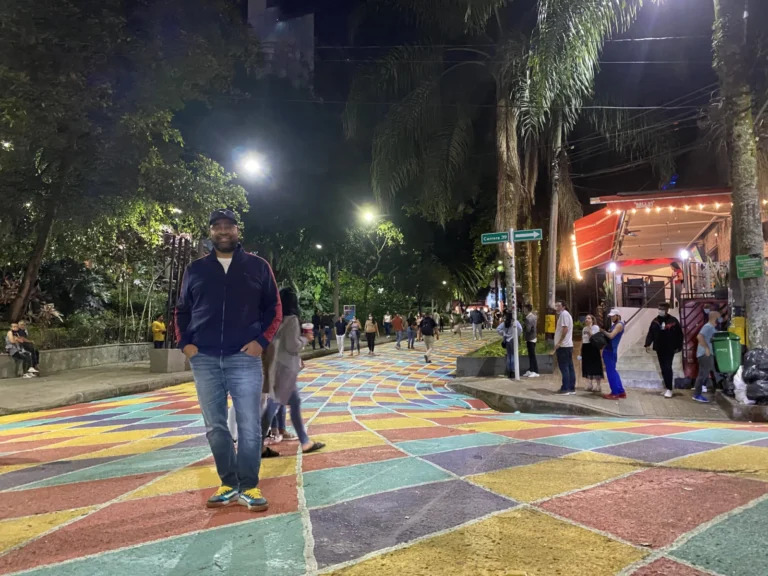
So, tejo in Medellín happened to me because of a Spanish school. Back in September 2021, I landed in Medellín for three months. First time in Latin America, I didn’t know anyone in Colombia, and I didn’t speak Spanish. All the people said that I am crazy. My weeks were basically school Monday to Friday, then work on my laptop from 8 a.m. to 8 p.m., and Rappi for dinner more often than I want to admit.
The school didn’t stop at grammar, though. It took us out into the city: my first bandeja paisa was on one of those outings, in El Centro. And one evening, the outing was tejo, Colombia’s national sport. Then we finished the night in a salsa club. Here’s that night, and what I’d check before planning your own.
If you want to see what those school outings looked like, here’s the El Centro one on my channel:
Playing tejo in Medellín
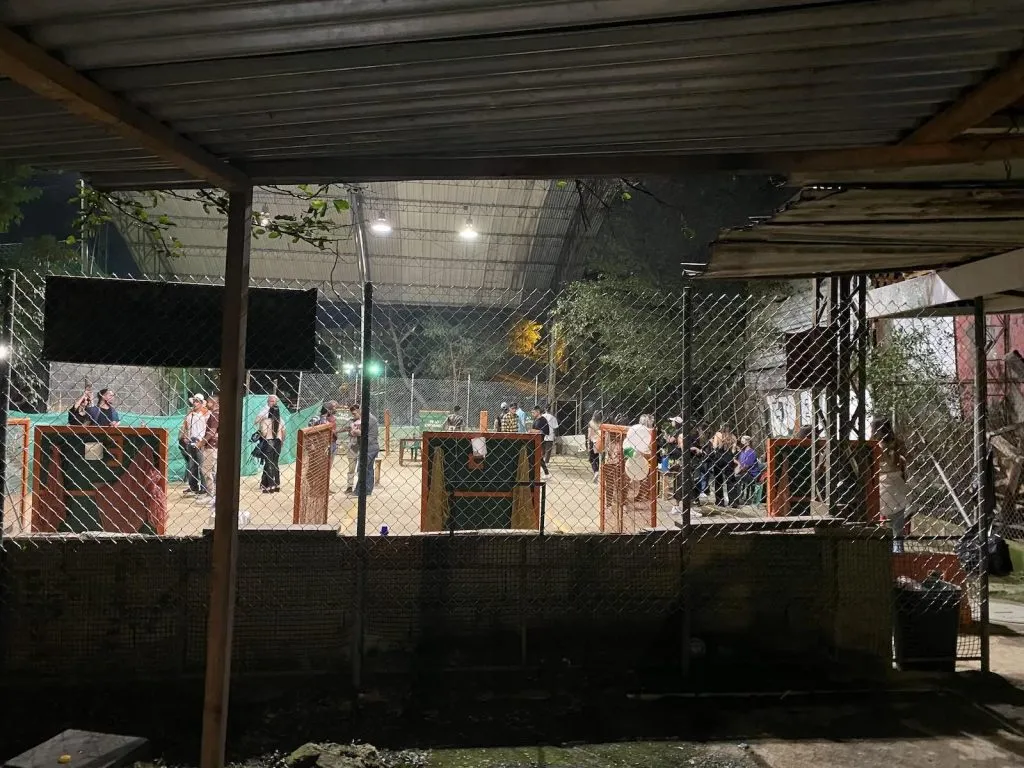
So the thing is, I have to correct myself first. In the first version of this post I wrote that they hand you a rock, and that if you hit the centre there’s a small explosion. Actually no, that’s not really how it works.
According to Marca País Colombia, the country’s official brand site, you throw a metal disc, the tejo, at a box of clay set in a wooden board. In the clay there’s a metal ring called the bocín, and on it sit small triangle packets of gunpowder: the mechas. The “boom” means you hit a mecha, not that you landed dead centre. Same source for the scoring: one point for the closest throw when nothing else scores, three for a mecha, six for an embocinada (the tejo buried inside the ring), nine for a moñona (both at once), and the first team to 27 wins. Colombia made tejo its national sport by law in 2000 (Law 613).
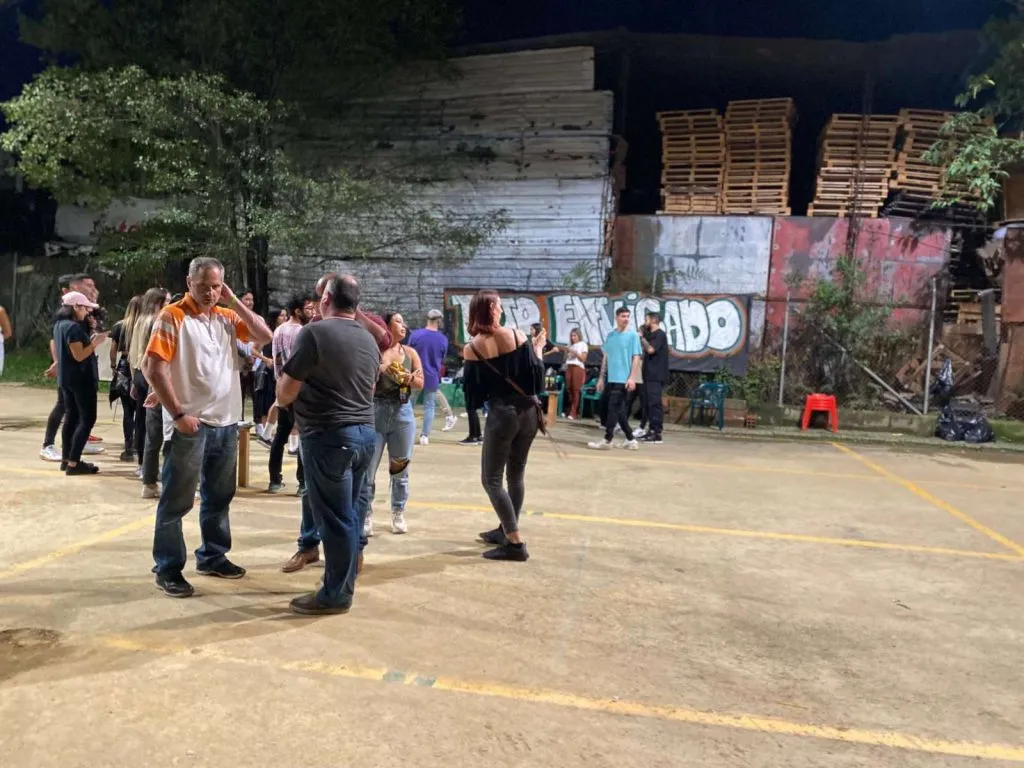
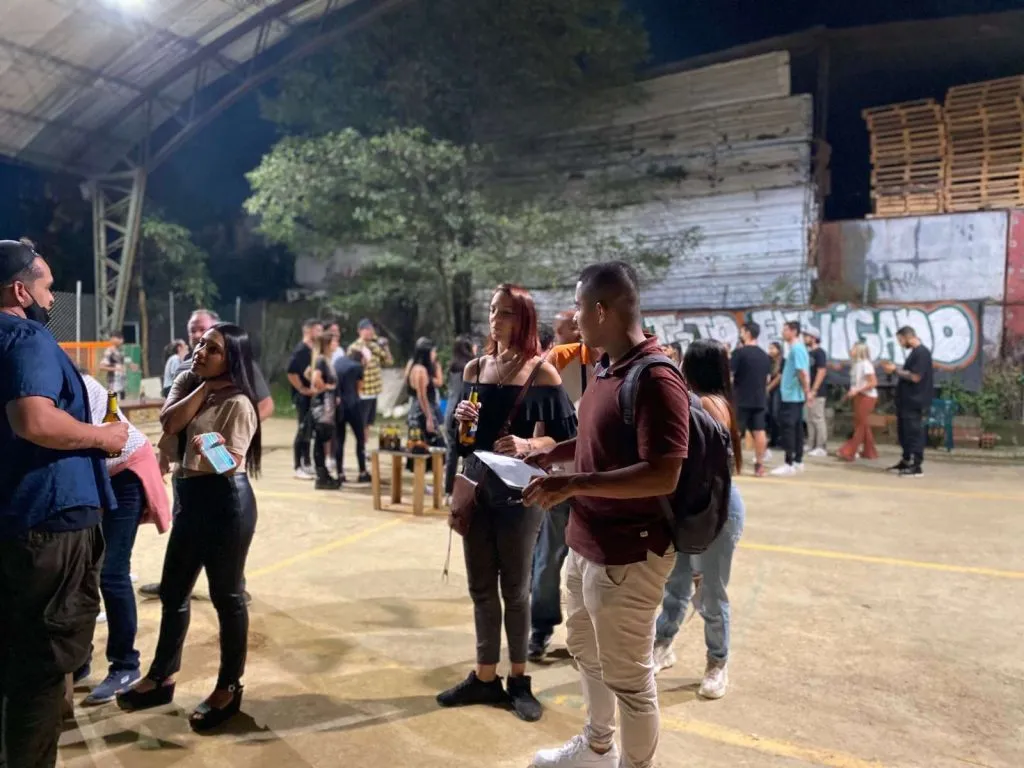
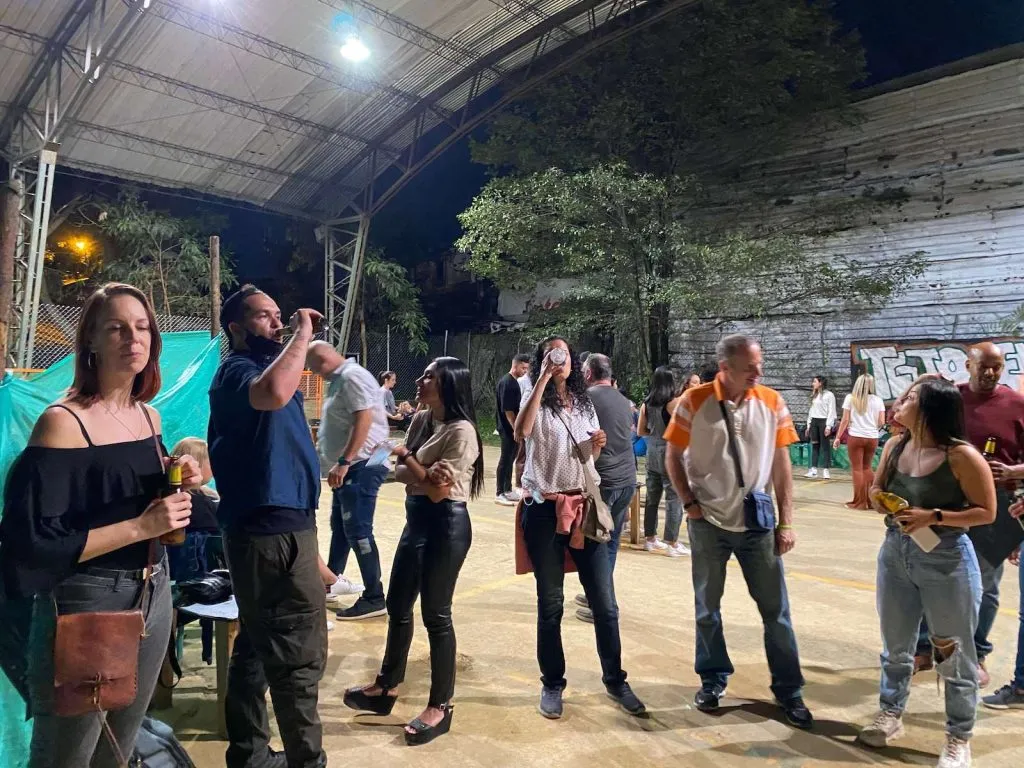
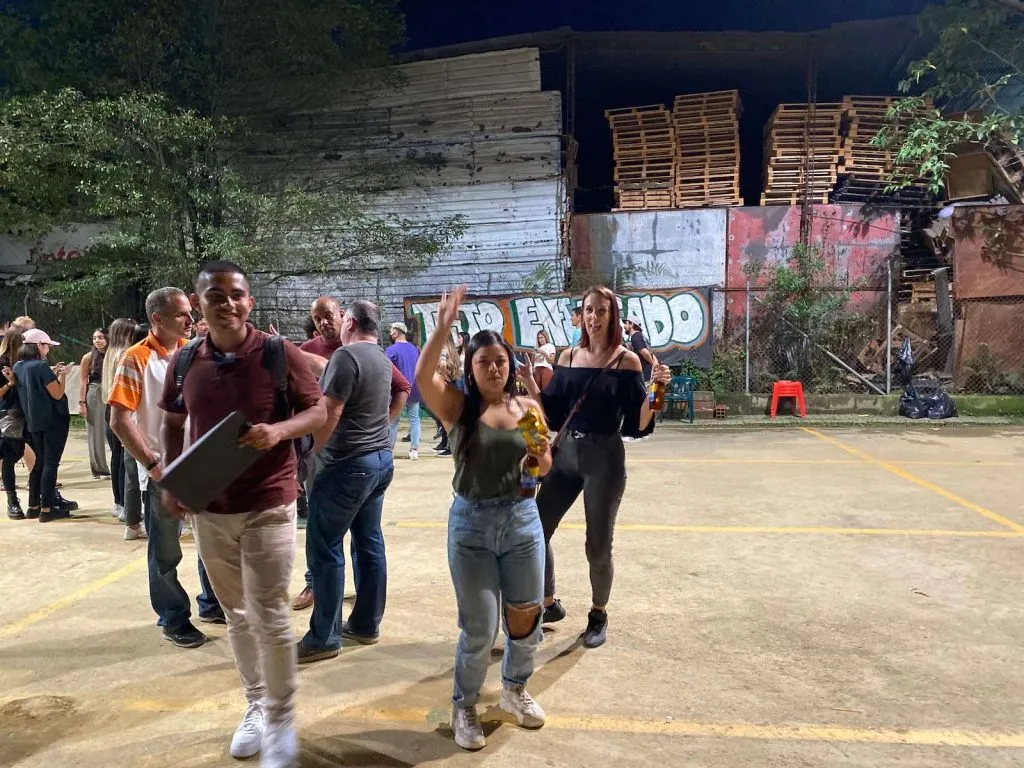
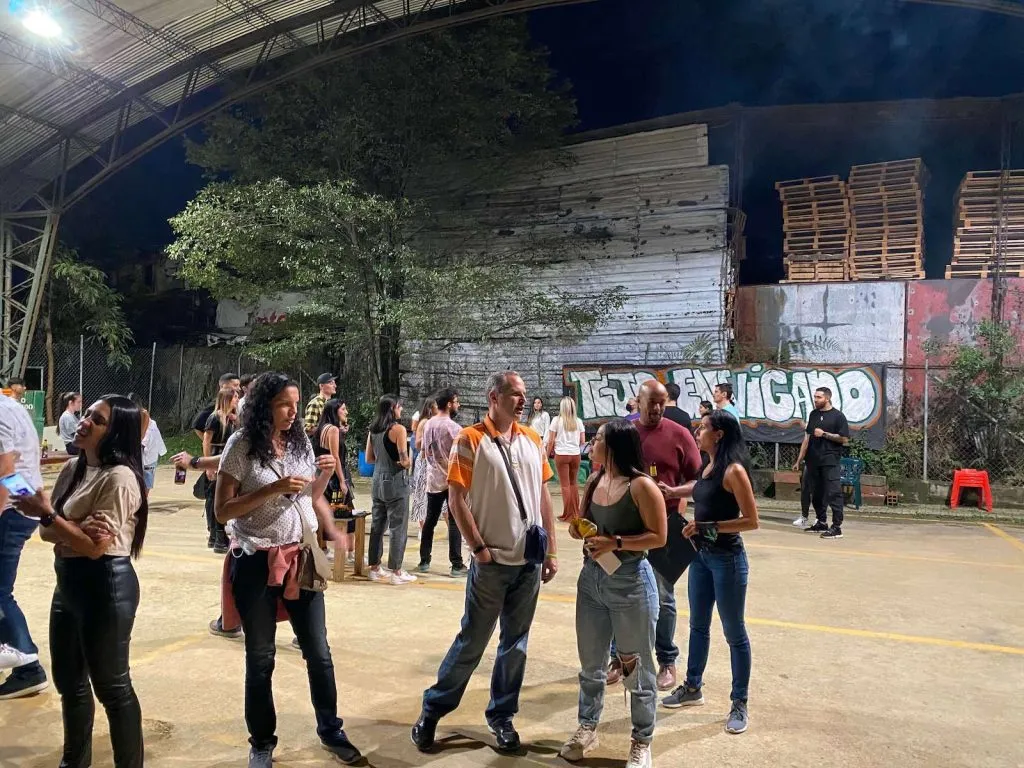
Me, I was just learning, and I don’t have a score to tell you about. What I remember is the evening: music playing, people talking, drinks going around, everyone laughing every time a mecha went off. It was more about being together than competing. For someone who barely spoke Spanish, that was perfect, because the game gives you something to do and the conversation just happens around it.
Tejo isn’t just a bar game, by the way. Colombia made it official: Law 613 of 2000 declares tejo a national sport, and Bogotá’s culture and sports secretariat has a kid-friendly explainer of the game if you want the basics before you go.
What’s less fun
It’s loud. The mechas are real gunpowder, so every hit is a bang, and with music on top you’ll be shouting a bit to be heard. If noise bothers you, ask the organiser what to expect before you go.
The rules aren’t obvious either, so ask someone to explain and show you before your first turn. And listen to the venue about where to stand and when to throw: people are launching metal discs across the room.
Planning your own tejo evening
My tejo came through the school, so if you’re studying Spanish in Medellín, ask your school what outings it runs. It’s the easiest door in when you don’t know anyone.
Otherwise, organised tejo tours exist on the usual booking sites. In the original post I said to head to a local barrio and ask around. That can work, but on a first visit without Spanish, I’d rather ask your host for a specific place, or book something organised, than wander a neighbourhood you don’t know. Go with a group if you can; it’s a group game.
Before you go, confirm with the organiser or the venue:
- The name, address and opening hours.
- Whether you need to book, and how many people you need.
- The price, and what it includes (equipment, drinks, food).
- Whether someone can explain the rules in a language you understand.
- How you get there and back at night.
What’s missing here: I didn’t keep the venue name, the price or the time for my evening. I’d rather tell you that than make one up.
Salsa after the game
After tejo, we took the night to a salsa club. This was not a dance class, just a place where people go to dance. Salsa is a big part of Medellín nightlife, and if you can’t dance, don’t worry too much: people are out to enjoy themselves, and don’t be surprised if someone crosses the room to ask you to dance. It’s all in good fun.
If you actually want to learn, that’s a different thing: book a class with an instructor. Airbnb Experiences, Facebook groups or simply asking around can get you to someone who teaches the basics.
For me, that night is a big part of why my three months felt like living there and not just visiting. More on that stay in my three months living in Medellín post, and if you’re building a list, here are my best things to do in Medellín.
FAQ
What is tejo?
Colombia’s national sport: you throw a metal disc at a clay box with a metal ring (the bocín) and gunpowder packets (the mechas). A mecha explodes when you hit it; that’s three points, not the centre. Marca País Colombia traces the game back more than 500 years to Turmequé, in Boyacá, though it presents that origin as a legend.
Do you need to speak Spanish?
I didn’t, and I still had a great night, because the game does the talking. But I was with my school group. On your own, ask the organiser in advance which language the rules will be explained in.
How much did this evening cost?
Honestly, I didn’t keep the amount. Ask the venue or tour for the current price. And the peso moved a lot: in 2021 I got over 3,000 COP for 1 CAD, today it’s more like 2,000, so a 2021 number wouldn’t help you anyway.