Skip to content

Cartagena grabbed me from the moment I stepped out of the taxi and into the Old City. The heat, the colors, the sound of cumbia drifting out of open doorways. I spent weeks exploring this city on Colombia’s Caribbean coast, and I’m still finding reasons to go back.
Whether you have two days or two weeks, there is no shortage of things to do in Cartagena, Colombia. This guide covers 25 of the best activities, neighborhood breakdowns, daily budgets, and a 3-day itinerary based on my own trips. I also included the tourist traps worth skipping so you don’t waste your time.
Quick Overview of Cartagena
Cartagena de Indias sits on Colombia’s northern Caribbean coast. Founded in 1533, it was one of the most important ports in the Spanish Empire. Today, the city is a UNESCO World Heritage Site known for its colonial architecture, vibrant street life, and proximity to some of the best islands in the Caribbean.
The city splits into distinct neighborhoods, each with its own character. The Walled City (Centro Historico) is where most tourists spend their time. Getsemani, just outside the walls, is grittier and more authentic. Bocagrande is the modern beach strip with high-rises and hotels. And Manga is a quiet residential area with beautiful early 20th-century houses that most visitors never see.
For a deeper look at the city’s past, check out our guide to the history of Cartagena.
25 Best Things to Do in Cartagena Colombia
1. Explore the Walled City (Centro Historico)
Walk Through 500 Years of History
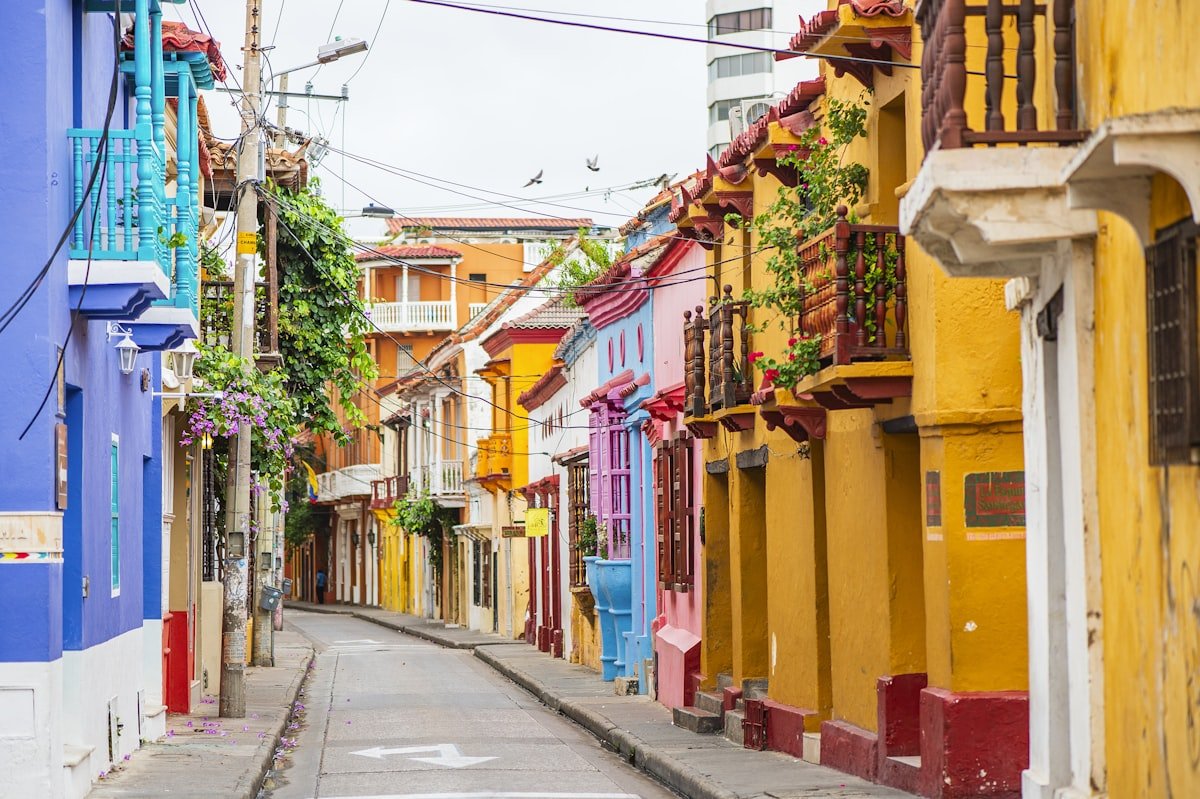
Every street in the Walled City tells a different story. Take your time and get lost on purpose.
The Walled City is the heart of Cartagena. Thick stone walls built in the 16th century to protect against pirate attacks surround a maze of narrow streets lined with colonial buildings painted in every color you can imagine. Balconies overflow with bougainvillea, and every corner reveals something worth photographing.
Take your time walking through Plaza Santo Domingo, Plaza de Bolivar, and the quieter streets behind the cathedral. The best time to explore is early morning before the heat kicks in or late afternoon when the light turns golden.
Cartagena is one of the most colorful towns in Colombia, and the Walled City is where you’ll see why.
2. Walk Through Getsemani
Street Art, Salsa, and Real Cartagena Vibes
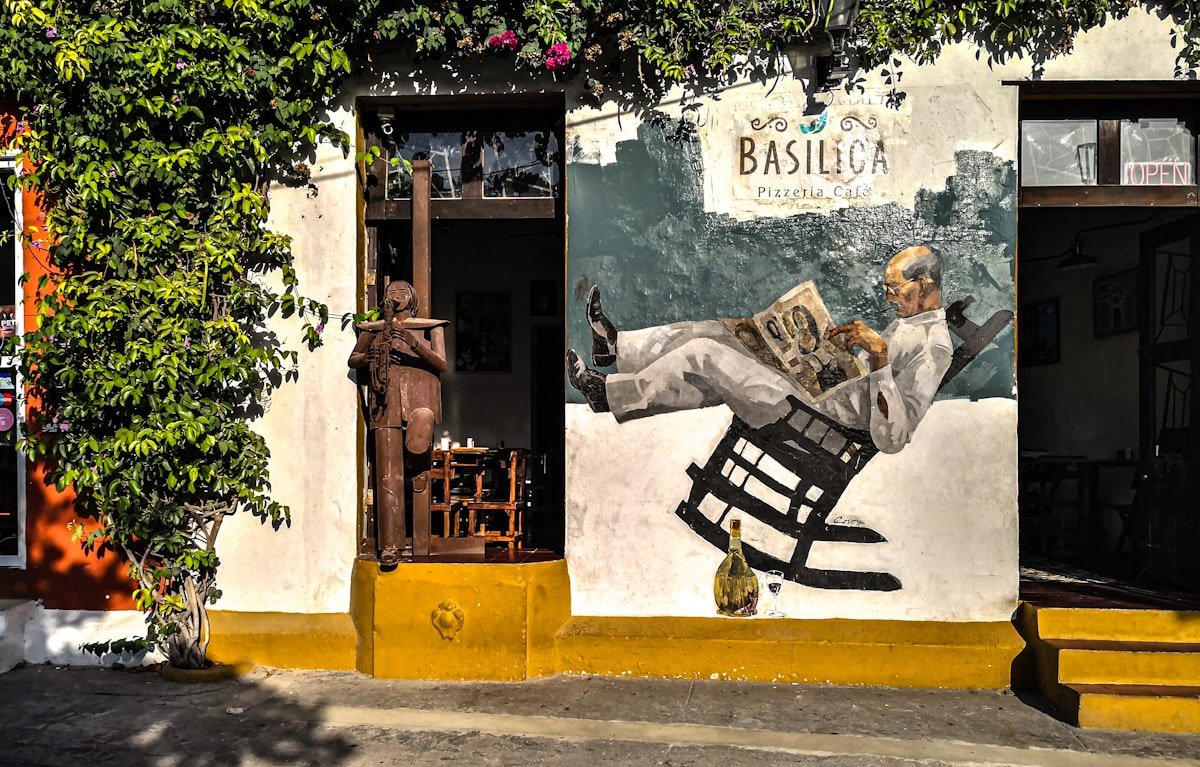
Getsemani’s murals change all the time. Every visit, there’s something new to discover on these walls.
Getsemani used to be the “rough” neighborhood just outside the city walls. Today it’s where the real energy lives. Street art covers entire building facades, plazas fill up with domino players in the afternoon, and at night, the bars and restaurants come alive.
Plaza de la Trinidad is the social center. Locals and travelers mix here every evening. Walk Calle de la Sierpe and the surrounding streets for the best murals. If you’re on a budget, Getsemani also has the best hostels and affordable restaurants in the city.
3. Visit Castillo San Felipe de Barajas
The Largest Spanish Fort in the Americas
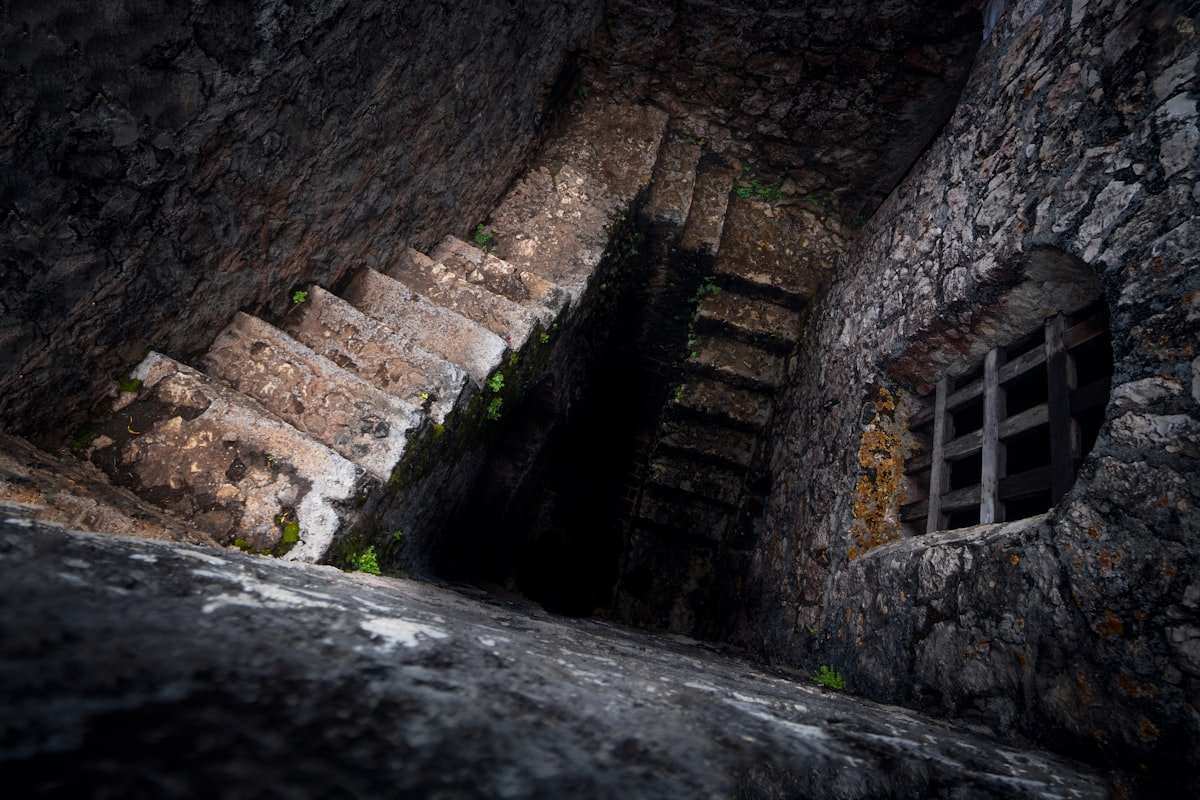
The tunnels underneath the fortress are the real highlight. Whisper at one end and someone can hear you at the other.
This massive fortress is the largest Spanish colonial fortification in the Americas. Built in 1536 and expanded over the centuries, it sits on a hill overlooking the city. The underground tunnels are the highlight. They were designed so that any sound would echo through the corridors, making it impossible for enemies to sneak in.
Bring water and wear sunscreen because there’s almost no shade. Entry costs around 45,000 COP (about $10 USD). Go early in the morning or late afternoon to avoid the worst of the heat. Allow about 1.5 hours to explore.
4. Watch the Sunset from the City Walls
The Best Free Show in Town
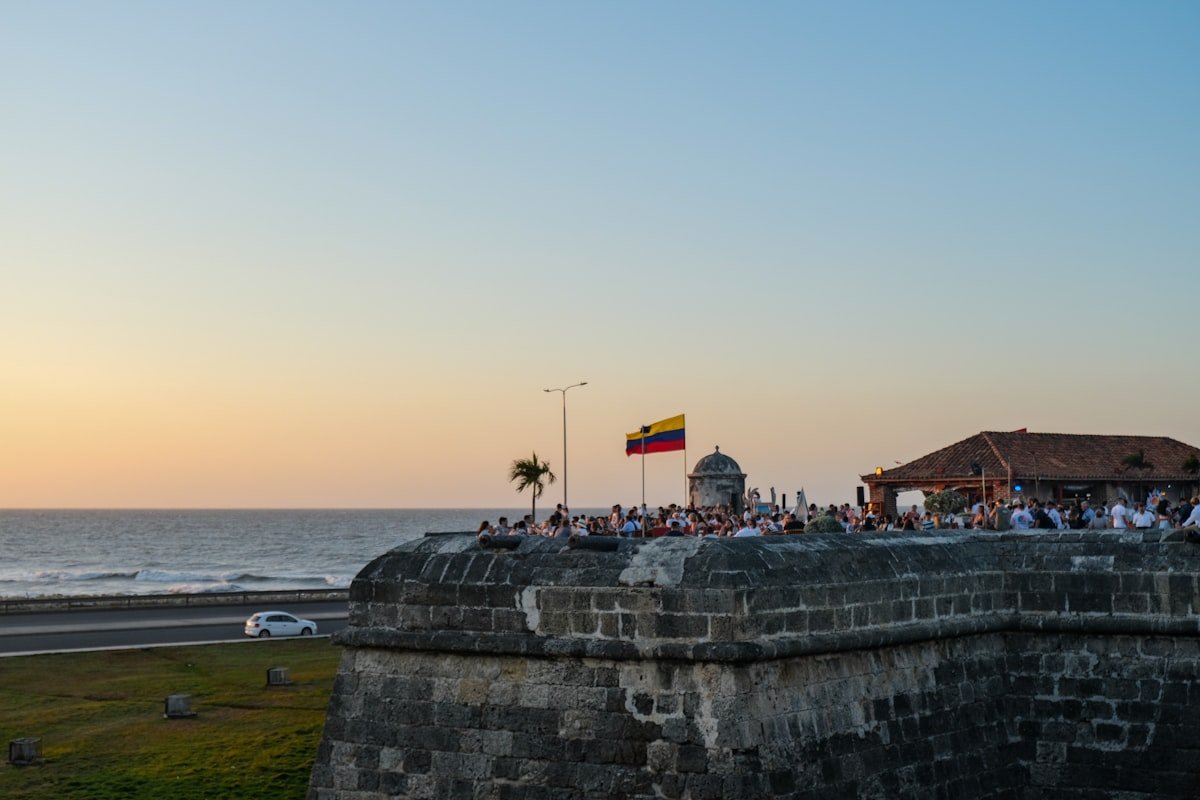
Grab a cold beer from a street vendor, find your spot on the walls, and let the Caribbean do its thing.
Every evening, locals and travelers gather on top of the city walls near the Cafe del Mar area to watch the sun drop into the Caribbean. It’s one of those simple things that never gets old. Grab a beer from a street vendor (about 5,000 COP) and find a spot. The stretch between the Clock Tower and the Baluarte de Santo Domingo is the most popular, but you’ll find quieter sections further along.
5. Take a Day Trip to the Rosario Islands
The Rosario Islands are a group of about 28 small islands roughly 45 minutes by boat from Cartagena. The water is clear and turquoise, and the beaches are white sand. Most visitors go for the day on organized boat tours that include snorkeling, lunch, and stops at beach clubs.
Expect to pay between 80,000 and 150,000 COP ($18-35 USD) for a shared tour. Private boat charters are available but significantly more expensive. The Rosario Islands are part of a national park, so there’s a small entrance fee on top of the tour price.
The islands are among the best places to visit in Colombia if you love beach days.
6. Explore Playa Blanca (Isla Baru)
Caribbean Beaches Without the Resort Price Tag
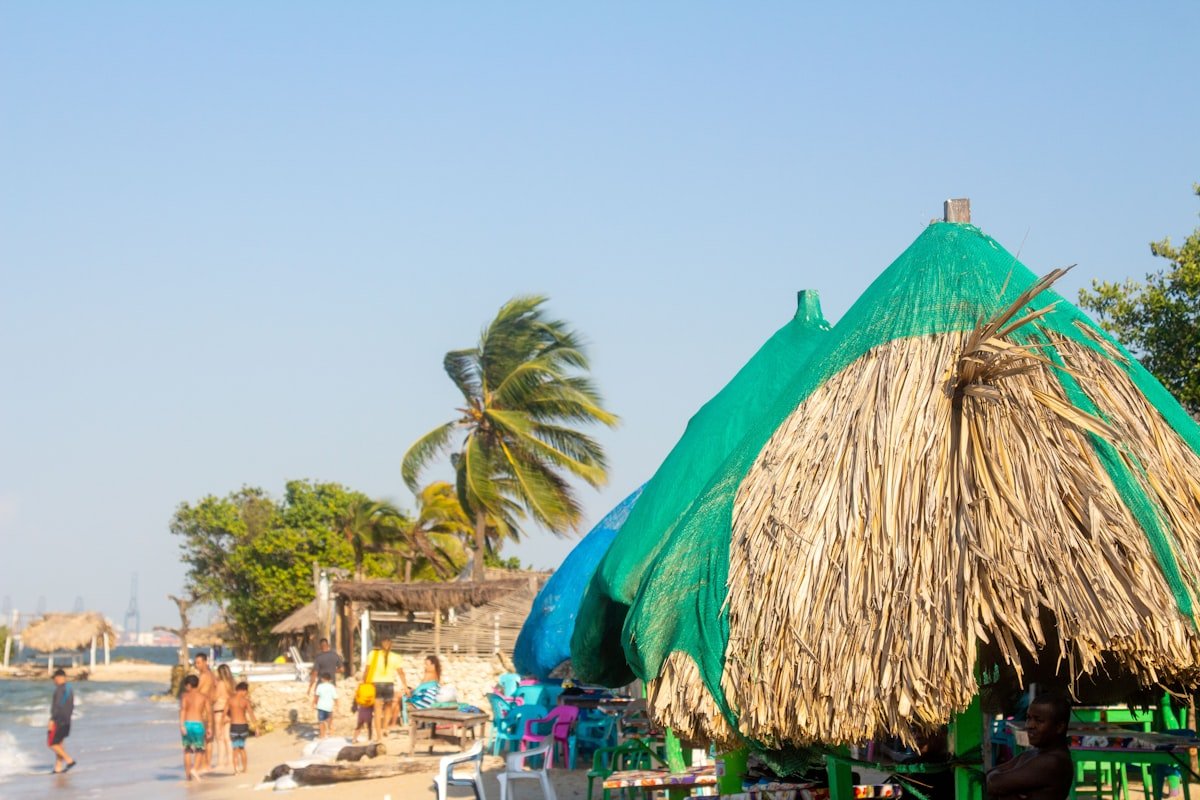
The water really is this blue. Bring cash and your own snacks if you want to save money.
Playa Blanca on Isla Baru is the closest postcard-perfect beach to Cartagena. You can get there by boat (45 minutes) or by road (about 1 hour). The beach is beautiful, but be ready for vendors approaching constantly trying to sell massages, jewelry, and food. A polite but firm “no, gracias” works.
If you go for the day, bring cash because there are no ATMs. Sunbed and umbrella rentals run about 20,000-30,000 COP. The seafood lunch plates (fried fish, coconut rice, patacones) are good and cost around 25,000-35,000 COP.
7. Try a Coffee Tasting
Colombia produces some of the best coffee in the world, and Cartagena has several spots where you can learn about the process from bean to cup. A guided tasting typically costs 60,000-100,000 COP and lasts about an hour. You’ll learn to distinguish different roast profiles and brewing methods.
For a deeper dive into the coffee culture, read our guide to Colombian coffee.
8. Do a Chocolate Workshop
Several shops in the Walled City offer cacao workshops where you make your own chocolate bar from raw cacao. It’s hands-on, fun, and you leave with chocolate you made yourself. Sessions last about 90 minutes and cost around 80,000-120,000 COP.
9. Visit the Palace of the Inquisition
The Inquisition Palace on Plaza de Bolivar documents the Spanish Inquisition’s presence in Cartagena from 1610 to 1821. The building itself is one of the finest examples of colonial architecture in the city. The displays include original torture devices used during the Inquisition. It’s not for everyone, but it’s an important part of understanding the city’s complex history.
Entry is about 24,000 COP. Plan for about 45 minutes to an hour.
10. Eat Your Way Through the Street Food Scene
The Real Flavors of Cartagena
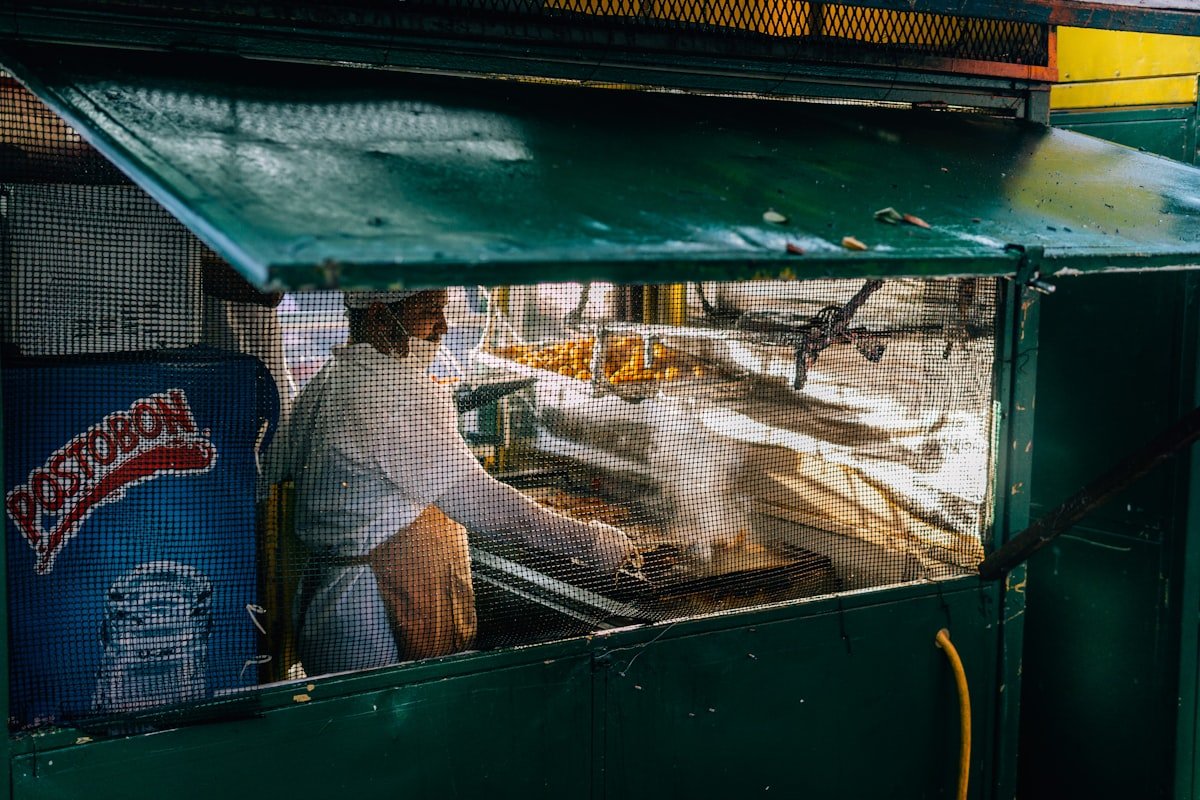
Arepas de huevo straight from the fryer. You haven’t lived until you’ve had one at 7 AM on a Cartagena street corner.
The street food in Cartagena is some of the best in Colombia. Here’s what to try:
- Arepas de huevo: Fried corn dough stuffed with egg. The quintessential Cartagena street food. About 3,000-5,000 COP.
- Empanadas: Crispy fried pockets filled with meat or cheese. Around 2,000-3,000 COP each.
- Ceviche: Street vendors in the Walled City sell cups of fresh shrimp ceviche for about 10,000 COP.
- Cocadas: Coconut candy in different flavors, sold by Palenquera women carrying bowls on their heads.
- Jugo de corozo: A tart red juice made from a local berry. Refreshing in the heat.
For more Colombian dishes to try, check out our complete guide to Colombian food.
11. Dance Salsa at Cafe Havana
Cafe Havana in Getsemani is a Cartagena institution. Live salsa bands play most nights, and the dance floor fills up with locals and travelers. Even if you can’t dance, the energy is infectious. There’s a cover charge of about 60,000 COP, and drinks are pricier than average, but it’s worth going at least once.
If Cafe Havana feels too crowded or expensive, walk around Getsemani and follow the music. Smaller bars on Calle de la Media Luna often have live music with no cover.
12. Take a Sunset Boat Cruise
Seeing Cartagena’s skyline from the water at golden hour is a different experience entirely. Several companies run sunset cruises that last about 2 hours. Most include drinks and sometimes dinner. Prices range from 100,000 to 300,000 COP depending on the boat and what’s included.
13. Find the Door Knockers of the Old City
This is one of those small details that makes Cartagena special. The colonial doors in the Walled City have ornate bronze knockers, each with a specific meaning. A lion knocker meant the resident was a military leader. A lizard indicated royalty. A mermaid meant a sailor lived there. An owl represented a teacher or scholar, and a hand knocker meant a priest.
Hunting for these knockers as you walk the streets turns a simple stroll into a treasure hunt. Look for the best ones on Calle del Curato, Calle de la Iglesia, and around Plaza de San Diego.
14. Visit the Naval Museum
The Naval Museum is one of the biggest museums in Cartagena and full of Colombian Navy history, old maps, and ship models. Many people come here thinking it will be a quick visit and end up staying longer than expected. Entry is about 25,000 COP.
15. Explore the Modern Art Museum
Museo de Arte Moderno showcases Latin American contemporary art in a converted colonial building. The collection rotates regularly, and the building itself is worth seeing. Entry is 10,000 COP. A good spot to escape the midday heat for an hour.
16. Try a Rum and Chocolate Tasting
Rum is the drink of choice in Colombia. Several places in the Walled City pair local rum varieties with chocolate for a tasting experience that covers the full flavor spectrum. Sessions last about an hour and cost around 80,000-120,000 COP. You’ll learn to appreciate the difference between aged Colombian rums and leave with a solid understanding of what to order at bars.
17. Walk Through Manga
Manga is the neighborhood that most tourists never see. It sits on a small peninsula south of Getsemani and is filled with beautiful early 20th-century Republican-era mansions. The streets are quiet, the architecture is stunning, and there’s almost nobody else around. It’s a 15-minute walk from Getsemani and well worth the detour.
18. Take a Free Walking Tour
Several companies run free walking tours of the Walled City and Getsemani. Tours last about 2.5 hours and cover the history, architecture, and culture of each neighborhood. The guides work on tips, so bring some cash. It’s the best way to get oriented on your first day.
19. Browse La Serrezuela
La Serrezuela is a historic bullfighting ring that’s been converted into a high-end shopping center. The mall itself is air-conditioned (a blessing in Cartagena), but the real draw is taking the escalator to the top floor where the original wooden arena has been preserved and restored. You can walk through the stands, feel the history, and enjoy the breeze. Free to enter.
20. Visit San Pedro Claver Church and Museum
This church and monastery are dedicated to Saint Peter Claver, a Spanish Jesuit priest who spent his life ministering to enslaved Africans brought through Cartagena’s port. The museum includes his original quarters and artifacts. The courtyard is peaceful and beautiful. Entry is about 17,000 COP.
21. Take a Cooking Class
Learning to make traditional Caribbean Colombian dishes is one of the best experiences in Cartagena. Several places offer half-day classes that start with a trip to the local market to buy ingredients, followed by hands-on cooking. Expect to make dishes like coconut rice, fried fish, patacones, and ceviche. Classes run about 150,000-250,000 COP.
22. Explore the Bazurto Market
Bazurto is Cartagena’s main local market and the opposite of the polished tourist experience. It’s loud, chaotic, colorful, and completely authentic. Fresh fruit, fish, meat, herbs, and household goods fill every aisle. It’s not for everyone, and you should watch your belongings, but if you want to see how locals actually shop, this is it. Go in the morning for the best experience.
23. See the Palenquera Women
The Palenquera women are descendants of escaped African slaves from San Basilio de Palenque, the first free town in the Americas. They wear traditional bright dresses and carry bowls of fruit on their heads. You’ll see them throughout the Walled City. If you want a photo, ask first and offer a tip (5,000-10,000 COP). Their history is a fundamental part of Cartagena’s cultural identity.
24. Visit Convento de la Popa
This convent sits on the highest point in Cartagena and offers panoramic views of the entire city. Built in 1607, it’s still an active religious site. The views alone make it worth the trip. Take a taxi up (don’t walk, the road is not safe on foot) and negotiate the price before you go. Entry is about 15,000 COP.
25. Party on a Chiva Bus
A chiva is a colorful open-air bus that’s become a Cartagena party tradition. Tours run at night and include music, drinks, and dancing on the bus as it drives through the city. It’s loud, wild, and very Colombian. Prices start around 60,000 COP. Not exactly a cultural deep-dive, but it’s a fun way to spend an evening if you’re in the mood.
Free Things to Do in Cartagena
Cartagena doesn’t have to be expensive. Here are the best free activities:
- Walk the city walls at sunset (free access from several entry points)
- Explore Getsemani’s street art on a self-guided mural tour
- Visit Plaza de Bolivar and people-watch in the shade of the trees
- See the India Catalina statue near the Convention Center
- Browse La Serrezuela and its preserved bullfighting arena on the top floor
- Watch the Palenquera women in traditional dress (photos cost a small tip)
- Walk through Manga to see beautiful Republican-era mansions
- Take a free walking tour (tips-based)
Cartagena Neighborhood Guide
Knowing the neighborhoods helps you decide where to stay and what vibe you’re looking for.
| Neighborhood | Vibe | Best For | Budget Level |
|---|---|---|---|
| Walled City (Centro Historico) | Historic, tourist-heavy, beautiful | First-time visitors, architecture lovers | $$$ |
| Getsemani | Artsy, lively, authentic | Budget travelers, nightlife, street art | $$ |
| Bocagrande | Modern, beachy, commercial | Beach access, chain hotels, shopping | $$-$$$ |
| Manga | Quiet, residential, historic | Off-the-beaten-path, photography | $$ |
For accommodation options across Colombia, see our guide to the best hotels in Colombia.
What to Skip in Cartagena (Tourist Traps)
Not everything in Cartagena is worth your time. Here’s what I’d avoid:
- Horse-drawn carriages: The horses often look exhausted and dehydrated in the Caribbean heat. Walk instead.
- The Mud Volcano (Volcan del Totumo): It sounds cool, but the experience is underwhelming. It’s a long drive for a cramped, lukewarm mud bath. The “massage” inside is aggressive, and the shower facilities are basic. Skip it unless you really want the photo.
- Overpriced restaurants on Plaza Santo Domingo: The location is beautiful, but prices are 2-3x higher than restaurants one block away. Walk a street or two for the same quality at local prices.
- Bocagrande beach: The sand is grey, the water is murky, and it’s crowded with vendors. If you want a real beach day, go to Playa Blanca or the Rosario Islands instead.
How Much Does Cartagena Cost? Daily Budget Breakdown
Cartagena is one of the more expensive cities in Colombia, but it’s still very affordable by North American or European standards. Here’s what a typical day costs (per person, in 2026):
| Category | Budget | Mid-Range | Comfort |
|---|---|---|---|
| Accommodation | 40,000-80,000 COP ($9-18) | 150,000-300,000 COP ($35-70) | 400,000+ COP ($90+) |
| Food | 30,000-50,000 COP ($7-12) | 60,000-100,000 COP ($14-23) | 120,000+ COP ($28+) |
| Transport | 10,000-20,000 COP ($2-5) | 20,000-40,000 COP ($5-9) | 50,000+ COP ($12+) |
| Activities | 0-30,000 COP ($0-7) | 50,000-100,000 COP ($12-23) | 150,000+ COP ($35+) |
| Daily Total | $18-42 USD | $66-125 USD | $165+ USD |
For a full rundown of travel costs across the country, read our Ultimate Colombia Travel Guide.
3-Day Cartagena Itinerary
Day 1: The Walled City and Getsemani
Morning: Start early (before 9 AM) and explore the Walled City. Walk through Plaza de Bolivar, visit the Inquisition Palace, and wander the colorful streets of the San Diego neighborhood. Stop for coffee at a local cafe.
Afternoon: Cross into Getsemani for lunch at a local restaurant. Explore the street art. Visit La Serrezuela for air conditioning and a cold drink. Walk through Parque Centenario.
Evening: Watch the sunset from the city walls near Cafe del Mar. Dinner at a restaurant in the Walled City, then head to Cafe Havana or a bar in Getsemani for live music.
Day 2: Castillo San Felipe and Islands
Morning: Visit Castillo San Felipe de Barajas early (opens at 8 AM). Spend 1.5-2 hours exploring the fortress and tunnels.
Afternoon: Take a boat to the Rosario Islands or Playa Blanca for the rest of the day. Most tours return around 4-5 PM.
Evening: Dinner in Getsemani. Try the street food along Calle de la Media Luna.
Day 3: Deep Cuts and Local Life
Morning: Coffee or chocolate tasting in the Walled City. Take a cooking class if you have time, or visit San Pedro Claver Church.
Afternoon: Walk through Manga to see the beautiful Republican-era houses. Visit the Naval Museum or the Modern Art Museum. Browse the shops around Plaza de San Diego.
Evening: Final sunset from the walls. Splurge on a nice dinner, or keep it casual with arepas de huevo and ceviche from street vendors. If it’s your last night, hop on a chiva bus.
Safety Tips for Cartagena
Cartagena is generally safe for tourists, but common-sense precautions apply:
- Don’t flash expensive jewelry or electronics in crowded areas, especially at night
- Use registered taxis or ride apps (InDriver and DiDi are popular in Colombia) rather than hailing random cabs
- Watch for common scams: “free” bracelets that turn into demands for payment, unsolicited massages on the beach, and overcharging in non-metered taxis
- Avoid walking alone at night outside the Walled City and Getsemani, especially toward the port area and La Matuna
- Keep copies of your passport in your phone and hotel safe
- Stay hydrated: The heat and humidity catch people off guard. Carry water and take breaks in shade or air conditioning
For a detailed look at safety across the country, read our article on whether Colombia is dangerous for travelers. If you’re traveling alone, our solo traveler’s guide to Colombia covers specific tips.
Best Time to Visit Cartagena
Cartagena is hot and humid year-round. Temperatures hover between 28-32 C (82-90 F) every month. The main difference is rain.
- Dry season (December to April): Best weather, fewer mosquitoes, but peak tourist season with higher prices and bigger crowds. January and February are the busiest months.
- Shoulder season (May, November): Occasional rain but fewer tourists and lower prices. A good compromise.
- Rainy season (June to October): Heavy afternoon showers most days, but mornings are usually clear. Prices drop significantly, and you’ll have attractions more to yourself.
We wrote a full breakdown in our guide to the best time to visit Cartagena.
Frequently Asked Questions
How many days do you need in Cartagena?
Three to four days is ideal. This gives you time to explore the Walled City, visit a fortress, take a day trip to the islands, and enjoy the nightlife without rushing. If you want to add a mud volcano trip or visit nearby towns, plan for five days.
Is Cartagena expensive compared to other Colombian cities?
Yes, Cartagena is one of the pricier cities in Colombia, especially in the Walled City. But it’s still affordable by international standards. Budget travelers can get by on $25-40 USD per day. Stay in Getsemani and eat at local spots to keep costs down.
Is Cartagena safe for solo travelers?
Cartagena is generally safe for solo travelers, including women traveling alone. Stick to well-lit, busy areas at night, use ride apps instead of street taxis, and be aware of common scams. The Walled City and Getsemani are the safest areas for walking at night.
Can you drink the tap water in Cartagena?
It’s not recommended. Stick to bottled or filtered water. Most restaurants and hotels provide purified water. A reusable bottle with a filter is a smart investment for Colombia travel in general.
Do you need to speak Spanish in Cartagena?
Not necessarily. Cartagena is one of the most tourist-friendly cities in Colombia, and many people in the hospitality industry speak basic English. However, learning a few Spanish phrases will make your experience much better, and locals appreciate the effort.
What should I pack for Cartagena?
Light, breathable clothing is essential. The humidity is intense. Pack sunscreen (SPF 50+), a reusable water bottle, comfortable walking shoes, a light rain jacket (even in dry season), and mosquito repellent. Leave the jeans at home.
Cartagena is one of those cities that gets under your skin. The combination of history, food, music, and Caribbean warmth makes it hard to leave. Whether you spend three days or three weeks, you’ll find your own rhythm here.
Planning a bigger trip? Check out our guide to the 10 must-visit cities in Colombia and our 12 breathtaking coastal towns for more ideas.